
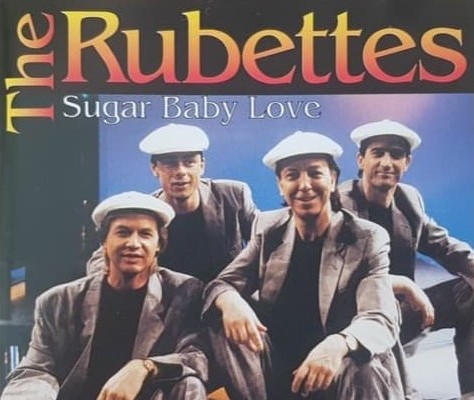
A falsetto dream where teenage innocence meets the machinery of pop perfection.
When The Rubettes released Sugar Baby Love in 1974, the record did not simply enter the charts, it floated to the summit. The single reached number one on the UK Singles Chart and echoed that success across Europe and beyond, becoming one of the defining pop hits of the decade. It appeared on the band’s debut album Wear It’s ‘At, an LP that captured a precise moment when nostalgia, studio craft, and commercial ambition converged into something improbably tender.
At its surface, Sugar Baby Love feels disarmingly simple. A soft shuffle rhythm, handclaps that seem borrowed from a school dance, and that unmistakable falsetto which rises like a sigh from another room. Yet simplicity here is a carefully engineered illusion. The song was written by Wayne Bickerton and Tony Waddington, architects of a sound that deliberately reached backward toward early 1960s pop while speaking directly to the anxieties and longings of the mid 1970s. This was not retro as parody. It was retro as emotional refuge.
The falsetto lead, famously sung by Paul Da Vinci rather than the group’s public frontman, gives the song its fragile core. It sounds almost weightless, as if the singer might disappear mid phrase. That vulnerability is essential. The lyrics do not describe a grand romance or adult certainty. They circle around devotion, reassurance, and the fear of being left behind. “I didn’t mean to make you blue” is not a dramatic confession. It is the quiet panic of someone who knows how easily affection can slip away.
Musically, the record borrows the language of doo wop and early beat pop, but it refines it with 1970s studio polish. The backing vocals are stacked like memory itself, each harmony recalling another era of pop innocence. The rhythm never rushes. It sways, allowing the listener to linger inside the feeling rather than be pushed forward by it. In a decade often remembered for excess and spectacle, Sugar Baby Love succeeds by refusing to shout.
Its cultural impact lies not in rebellion but in comfort. At a time when pop music was fragmenting into glam, prog, and hard rock, The Rubettes offered something gentler. The song became a reminder that vulnerability could still sell, that softness could still dominate the airwaves. Decades later, it endures not because of novelty, but because it captures a universal emotional truth. Love, at its most honest, often sounds exactly like this. Slightly unsure. Openly hopeful. And trembling just enough to feel real.