
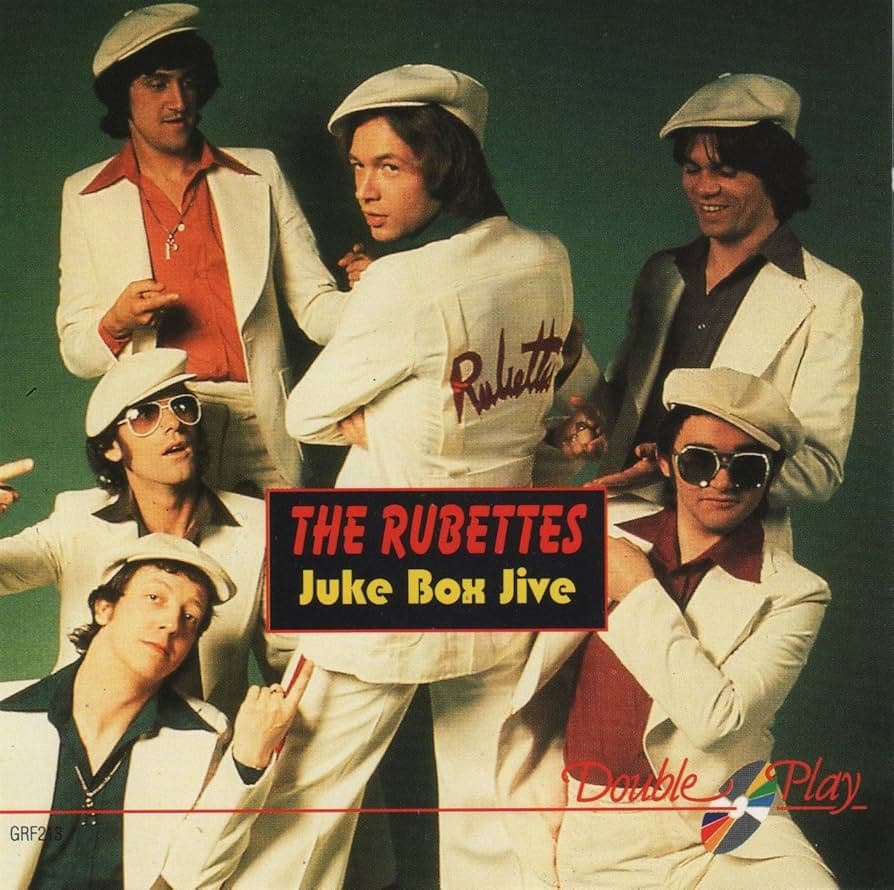
Celebration of teenage memory and manufactured nostalgia where rock and roll innocence is replayed like a favorite record that never wears out
When The Rubettes released Juke Box Jive in 1974, the song did more than climb the charts. It reached number one on the UK Singles Chart and became the defining hit from their debut album Wear It’s ‘At?, announcing a group that understood how to turn memory into melody. At a time when glam rock shimmered and pop chased novelty, this record looked backward with affection, transforming borrowed sounds into something emotionally immediate. Its success was swift, but its staying power came from something deeper than fashion.
Juke Box Jive is not merely a pastiche of 1950s rock and roll. It is an act of emotional reconstruction. Built on hand claps, doo wop harmonies, and a deliberately vintage production style, the song recreates the feeling of standing in a small room where music mattered more than adulthood, responsibility, or consequence. The juke box in the title is not a prop. It is a vessel. It holds memory, desire, and the illusion that youth can be replayed on demand if the right song is selected.
Lyrically, the song avoids specificity, and that is its greatest strength. There are no named streets, no dated references, no fixed narrative arc. Instead, the listener is invited into a shared emotional space where first love feels permanent and music is the language that explains everything the heart cannot articulate. The chorus rises not with drama but with recognition. You know this feeling. You have stood here before. The past hums softly beneath the surface.
The performance itself is carefully engineered to feel effortless. The falsetto refrain, which became the song’s most recognizable signature, evokes vulnerability rather than showmanship. It sounds like a voice breaking not from technical strain but from emotion. This choice aligns perfectly with the song’s theme. Nostalgia is fragile. It wavers. It is never sung from the chest but from somewhere higher and more exposed.
Culturally, Juke Box Jive arrived during a period when popular music was increasingly self aware. The song does not pretend to be from the past. It openly admires it. In doing so, it helped legitimize nostalgia as a creative force rather than a retreat. For many listeners, especially in Britain, it became a bridge between generations. Parents heard echoes of their youth. Teenagers discovered that the emotions of earlier decades were not so different from their own.
Over time, Juke Box Jive has endured as more than a chart topper. It stands as a reminder that authenticity in pop music is not always about originality of sound, but sincerity of feeling. The Rubettes understood that memory itself can be a hook, and they built a song that continues to spin long after the needle first touched the vinyl.