
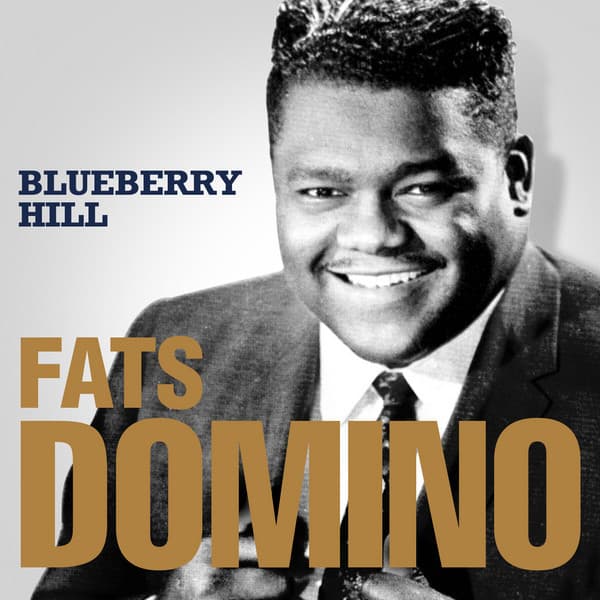
When Rock ‘n’ Roll Was Young: The Sweetest Sound on the Hill
A Tender, Timeless Memory of Lost Love on a Moonlit Knoll
If ever a single song encapsulated the glorious, unexpected collision of old-school Tin Pan Alley romance and the emerging, irrepressible pulse of rock and roll, it is “Blueberry Hill.” But to truly appreciate its magic, you must hear it through the warm, velvet voice and the gently rocking piano of Antoine “Fats” Domino. This wasn’t merely a hit record; it was a cultural bridge, a comforting sound that managed to thrill teenagers while still charming their parents in the mid-1950s.
Released in 1956, this track became the quintessential signature song of Fats Domino and marked the zenith of his crossover power. The raw statistics speak to its massive impact:
The story behind “Blueberry Hill” begins long before Fats Domino touched his hands to the keyboard. It was originally a standard pop tune, first recorded in 1940 by artists like Sammy Kaye and Glenn Miller, and even crooned by Gene Autry in a Western film. It belonged to an era of smooth orchestras and simple, romantic sentiments.
But in 1956, when Fats Domino and his longtime producer and collaborator, Dave Bartholomew, decided to tackle the song, they didn’t just cover it—they re-birthed it. They stripped away the big band veneer and applied that irresistible, rolling New Orleans shuffle beat that Domino had perfected. The recording, made for Imperial Records, is masterclass in restraint. It’s the sound of Domino’s deep, molasses-rich vocal delivery, effortlessly swinging the melody, accompanied by his signature boogie-woogie piano triplets. It’s the essence of New Orleans R&B, polished just enough to sneak past the stringent tastes of mainstream radio.
The meaning of the song is pure, tender nostalgia, which is why it speaks so powerfully to the reflective heart of an older audience. The lyrics paint a classic, romantic tableau: a rendezvous on a moonlit hill, beneath a breezy willow, where a promise of love was made.
“The moon stood still on Blueberry Hill / And whispered that we might be one.”
It’s an idealized memory of a perfect moment in time. Crucially, the song is tinged with the sadness of now: that love and those vows “were never to be.” It is a profound meditation on the power of memory to sustain us, even when reality has diverged. The physical location of Blueberry Hill is unimportant; it’s a mental landscape, the cherished spot where one’s heart remains tethered to a sweet, departed moment.
For those of us who came of age during that dynamic decade, “Blueberry Hill” felt like the soundtrack to our first slow dances. It was a safe, warm, and utterly charming introduction to the rock and roll revolution. It was the friendly face of a movement that conservative voices were trying to label as dangerous. Fats Domino wasn’t defiant; he was welcoming. He made a song about enduring, gentle memory into an enduring, gentle hit that proved that real American music, whether pop, R&B, or the nascent rock, was truly indivisible. It is, to this day, a thrill that runs clean through the heart.