
Joy Returns With a Second Line Bounce and a Smile You Can Hear
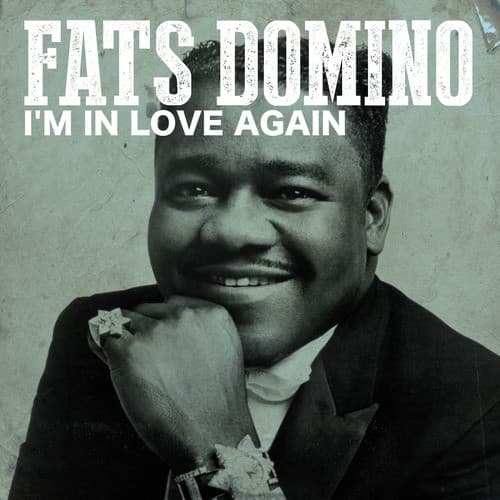
Released in 1956, I’m in Love Again announced itself as both a commercial force and a personal declaration from Fats Domino, climbing to number three on the Billboard Rhythm and Blues chart and reaching number eleven on the Billboard pop chart. Issued as a single on Imperial Records and later associated with the album Rock and Rollin with Fats Domino, the song arrived during a period when Domino was redefining the sound of American popular music. It carried his unmistakable piano style and easy vocal warmth into living rooms far beyond New Orleans, confirming his role as one of the architects of early rock and roll.
At first glance, I’m in Love Again seems almost disarmingly simple. The lyric is built around repetition and plainspoken confession. Yet that simplicity is the point. Domino understood that joy, like heartbreak, does not always require elaborate language. Sometimes it only needs rhythm, momentum, and a voice that sounds like it believes every word. The song opens with a rolling piano figure that feels less like an introduction and more like motion already in progress, as if love has burst in unannounced and the band is scrambling happily to keep up. This sense of forward motion mirrors the emotional content of the song. Love here is not cautious or reflective. It is immediate, physical, and unstoppable.
The performance is deeply rooted in New Orleans musical tradition. The rhythm carries the sway of second line parades, and the piano triplets recall barrelhouse blues while pointing unmistakably toward rock and roll’s future. Domino’s vocal delivery is relaxed yet buoyant. He never strains for emphasis. Instead, he lets the groove do the persuading. When he sings that he is in love again, the word again carries a quiet history. It implies experience, disappointment survived, and a return to hope without bitterness. That emotional subtext gives the song a depth that rewards careful listening.
Culturally, I’m in Love Again stands as an example of how Black rhythm and blues crossed into the mainstream without losing its identity. Domino did not dilute his sound to reach a wider audience. He invited listeners into his world by trusting the universality of joy. The song’s success on both rhythm and blues and pop charts demonstrated that audiences were ready to follow that invitation. It also helped establish a template for rock and roll that valued warmth and groove over aggression.
Within Domino’s catalog, the song occupies a special place. It is not tragic, defiant, or melancholic. It is affirmative. In an era often remembered for youthful rebellion, I’m in Love Again reminds us that early rock and roll also celebrated renewal and emotional honesty. More than six decades later, the record still feels alive. Its piano still skips, its rhythm still smiles, and its declaration still lands with the quiet confidence of an artist who knew that love, once found again, deserved to be shouted from the jukebox.