
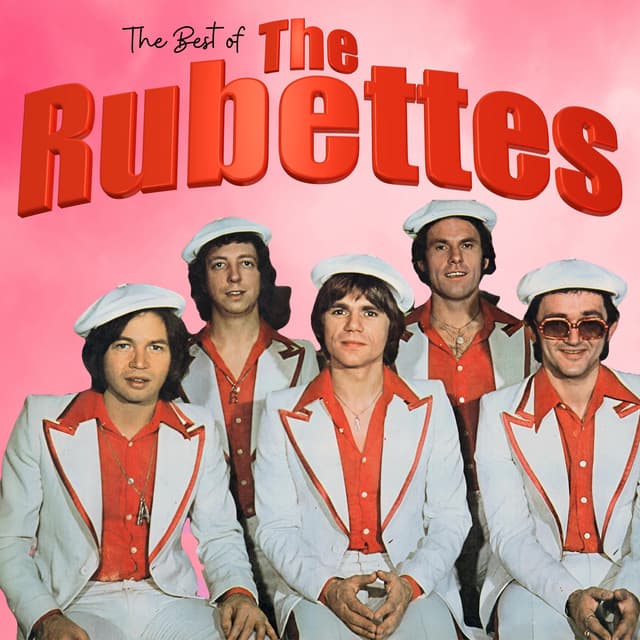
Declaration of devotion where innocence and longing collide inside the bright echo of seventies pop.
When The Rubettes released You’re The Reason Why in 1974, the song rose swiftly to the top of the UK Singles Chart, securing a Number One position and confirming the group’s place in the pop conversation of the decade. It appeared on the album We Can Do It, a record that arrived at a moment when glam pop, nostalgia, and studio craft were being carefully woven together for mass appeal. Yet chart success alone does not explain why this song continues to resonate. Its endurance lies in how it packages emotional certainty inside a deceptively simple frame.
At first glance, You’re The Reason Why feels almost childlike in its directness. The lyrics do not hide behind metaphor or irony. They speak plainly, almost insistently, about love as a grounding force. This was a deliberate contrast to the growing cynicism of the era. While much of early seventies pop flirted with excess or theatrical ambiguity, The Rubettes leaned into sincerity, even at the risk of sounding naïve. That risk became the song’s greatest strength.
Musically, the track borrows heavily from earlier pop traditions. The harmonies echo the doo wop and early rock and roll records of the late fifties and early sixties, filtered through modern production clarity. The falsetto passages, which became a signature element for the group, are not decorative flourishes. They function as emotional punctuation, lifting the song into a vulnerable register where devotion feels fragile rather than guaranteed. The arrangement moves with buoyant confidence, yet there is always a sense that this happiness is hard won and must be affirmed again and again.
Lyrically, the song operates as a confession repeated until it becomes a promise. The narrator does not merely state love but circles it, reinforcing the idea that affection gives meaning to action and direction to life. There is no grand narrative, no dramatic backstory imposed on the listener. Instead, the song invites personal projection. It becomes a mirror for anyone who has ever needed to explain, perhaps to themselves, why love matters at all.
Culturally, You’re The Reason Why arrived at a time when audiences were ready to revisit emotional clarity. After years of social change and musical experimentation, there was comfort in a song that did not challenge the listener to decode it. This was pop music as reassurance, not escapism but affirmation. The Rubettes were often labeled as retro revivalists, yet this track proves that nostalgia can be emotionally forward looking. It does not retreat into the past. It borrows its language to speak to the present.
Today, the song endures not because it reinvented pop, but because it trusted emotion without embarrassment. In the vast archive of seventies hits, You’re The Reason Why remains a reminder that sometimes the most powerful statement a song can make is also the simplest.