
A Quiet Confession of a Love That Time Could Never Erase
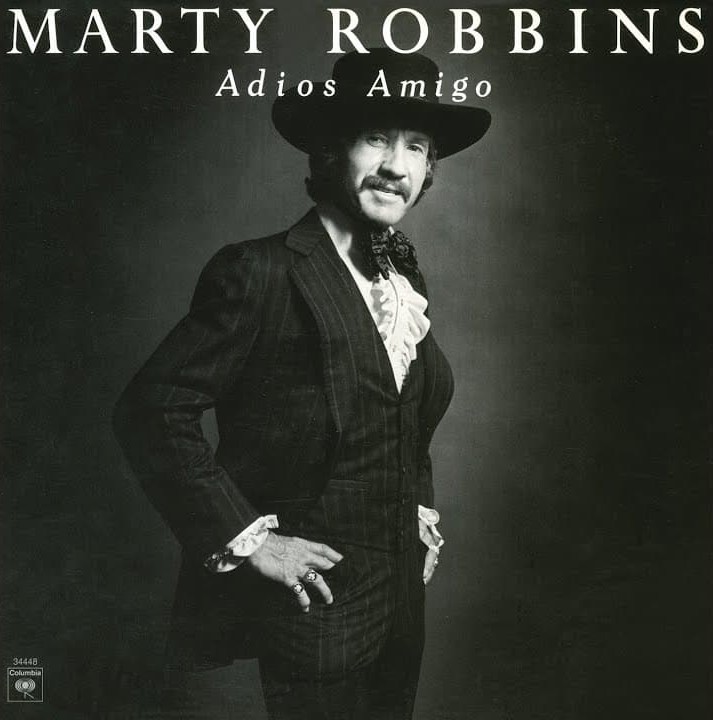
With a voice steeped in both the dust of the frontier and the ache of the heartland, Marty Robbins’ rendition of “I’ve Never Loved Anyone More” stands as one of the quieter, most poignant moments on his 1977 studio album Adios Amigo. Though never released as a single with its own chart trajectory in the way so many of Robbins’ classics did, the song occupies a crucial emotional space in his late-career catalog, offering listeners a rare glimpse into the softest undercurrents of his artistic sensibility. The album itself reached the Top 5 on Billboard’s Top Country Albums and helped solidify Robbins’ place in the pantheon of country music storytellers well into the 1970s. Adios Amigo also featured other deeply felt performances that balanced commercial appeal with contemplative depth.
From the very first lines of “I’ve Never Loved Anyone More,” Robbins evokes a world where memory and longing are indistinguishable. The narrator insists that he does not dwell constantly on a lost love, yet in the telling he reveals exactly how inextricably that past passion is woven into his present self. Such emotional paradoxes are at the heart of classic country storytelling, but Robbins’ delivery—measured, unvarnished, and rich with gravity—lends the lyrics a weight that transcends mere lamentation. Unlike the rousing narratives of gunfighters and wide-open plains that defined hits like “El Paso,” here the terrain is internal, the landscape the contours of memory and desire itself.
The song’s narrative unfolds with stark simplicity. Time may numb the immediate sting of loss, the voice suggests, but it cannot fully quiet the echo of what was shared. By acknowledging that another person now stands beside him, offering solace and the promise of forgetting, the narrator paradoxically underscores the irreplaceability of his original love. This duality—acceptance and regret, renewal and remembrance—is at the core of the track’s emotional resonance. Robbins avoids melodrama; there are no soaring crescendos or theatrical twists. Instead, the performance is an intimate confession, as though the singer invites you into a dimly lit room where heartache has settled comfortably into the furniture.
Musically, the arrangement mirrors this introspective tone. Soft pedal steel accents and a gentle rhythmic pulse allow Robbins’ baritone to occupy the foreground, each phrase articulated with a clarity that makes every syllable count. There are no gimmicks here, only a seasoned artist embracing the subtleties of emotional truth. In the broader context of his work, “I’ve Never Loved Anyone More” exemplifies Robbins’ versatility: he was just as compelling in the realm of tender introspection as he was in sweeping epics of Western mythos. His ability to shift registers—from dramatic ballads to hushed admissions of longing—cements his status as one of country music’s most complete voices.
In the end, the song’s power lies not in chart statistics but in its capacity to delineate the contours of love’s enduring presence. It asks listeners to consider how deeply the past inhabits the present, and how even when life moves forward, some affections remain unforgettable. In Robbins’ hands, this is not merely a statement of sorrow—it is a tribute to a love that time, distance, and circumstance could never truly diminish.