
A Reckless Celebration of Youth, Rhythm, and the Moment When Restraint Finally Let Go
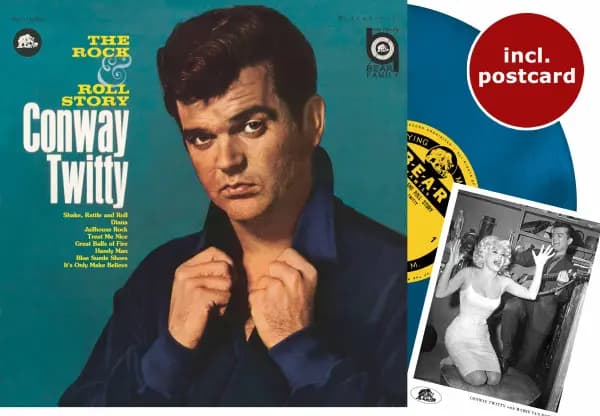
Upon its release in 1956, Conway Twitty’s recording of “Shake, Rattle And Roll” arrived not as a chart conquering juggernaut but as a telling early statement from an artist still finding his place in the new language of rock and roll. Issued as a standalone single rather than as part of a formal studio album and later gathered on retrospective collections of his early work, the song briefly registered with listeners during a period when Twitty, then recording under his birth name Harold Jenkins, was testing the boundaries between country roots and the unruly pull of rhythm and blues. Long before his reign as a country hitmaker, this performance captured an artist leaning toward the future with nervous excitement and raw intent.
“Shake, Rattle And Roll” was already charged with cultural electricity by the time Twitty entered the studio. Originally written and recorded by Big Joe Turner, the song had become a defining artifact of mid 1950s American music, a bridge between blues tradition and the commercial explosion of rock and roll. What Twitty brings to the material is not imitation, but interpretation. His vocal lacks Turner’s seasoned swagger and instead offers something more volatile, a young man pushing his voice to match the urgency of the rhythm beneath him. There is hunger in the phrasing, a sense that the singer is chasing the beat rather than commanding it, and that tension becomes the recording’s quiet strength.
Lyrically, the song is a study in motion and release. Its imagery is built on repetition and physicality, words that sway, stomp, and tumble forward with barely a pause for reflection. In Twitty’s hands, the song becomes less about bravado and more about surrender to the moment. This is not the polished confidence of his later country ballads, but a portrait of youth caught in the headlights of a cultural shift. Rock and roll here is not nostalgia yet. It is risk.
Musically, the arrangement emphasizes drive over finesse. The piano pounds insistently, the rhythm section keeps a relentless forward push, and Twitty’s voice rides the groove with just enough restraint to hint at his country instincts. You can hear the discipline trying to coexist with rebellion. This tension mirrors the larger story of Twitty’s career, an artist who would later master emotional control and narrative clarity, but who began by letting the music run ahead of him.
In retrospect, “Shake, Rattle And Roll” occupies a fascinating place in Conway Twitty’s legacy. It is not remembered for chart dominance, but for what it reveals. This is the sound of an artist standing at a crossroads, absorbing the shockwaves of a new musical era. Listening now, the recording feels like a snapshot of American music mid transformation, when genres blurred, rules bent, and young voices learned how to shout. For those willing to listen closely, it remains a vital chapter in the story of a singer who would later learn how to whisper just as powerfully as he once roared.