
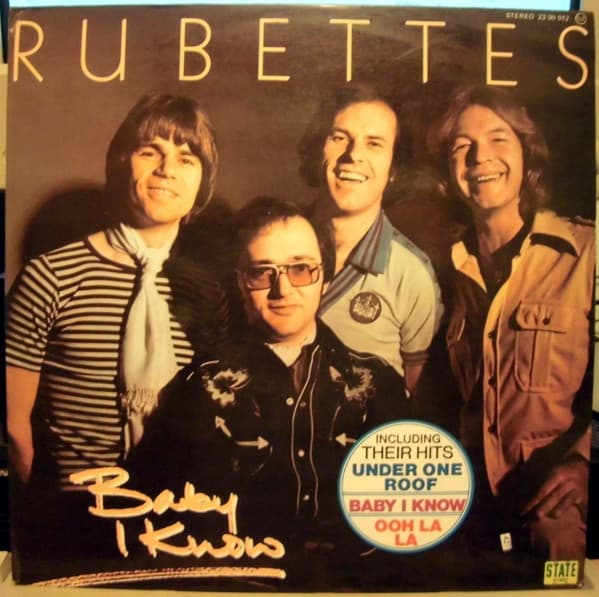
A tender confession wrapped in harmony, where certainty in love becomes both comfort and quiet vulnerability
Released by The Rubettes in 1977, Baby I Know arrived as a confident yet intimate statement of devotion, climbing into the Top Ten of the UK Singles Chart and reaffirming the group’s commercial relevance beyond their glitter era breakthrough. The song served as the title track of the album Baby I Know, a record that marked a more mature phase for the band, distancing itself from pure revivalism and leaning into polished pop craftsmanship. For The Rubettes, long associated with nostalgic vocal textures and carefully staged romance, this single stood as a reminder that emotional clarity could be just as compelling as youthful fantasy.
At its heart, Baby I Know is not a song about the chase. It is about arrival. The narrator speaks from a place of earned confidence, where love is no longer questioned or dramatized, but calmly affirmed. That certainty, however, is not sterile. Instead, it carries a quiet fragility. The repeated assurances feel less like boasts and more like promises spoken softly, as if to protect something precious from the noise of the outside world. This emotional balance is one of the song’s great strengths. It understands that conviction in love often coexists with the fear of loss.
Musically, the song reflects this emotional posture with precision. The arrangement is smooth and restrained, allowing melody and harmony to lead rather than spectacle. The Rubettes were masters of vocal blend, and here their harmonies function almost like a shared memory, layered gently behind the lead as if echoing thoughts already agreed upon. The rhythm moves with assurance, never rushing, reinforcing the sense that this relationship has found its pace. Nothing feels accidental. Every chord change supports the lyrical intent of reassurance and emotional steadiness.
Culturally, Baby I Know occupies an interesting space in the band’s legacy. By the late nineteen seventies, pop audiences were shifting. Glam nostalgia was giving way to introspection, disco polish, and emerging new wave tension. Rather than chasing trends, The Rubettes offered refinement. This song does not demand attention through novelty. It earns it through sincerity. That choice has allowed the track to age gracefully, particularly for listeners who value emotional honesty over dramatic excess.
Today, Baby I Know resonates most strongly with those who understand love not as a moment of ignition, but as a sustained flame. It speaks to maturity, to the quiet courage of saying you are sure and meaning it. In the long grooves of pop history, this song remains a subtle testament to the power of certainty spoken gently, and the enduring appeal of harmony both musical and emotional.