
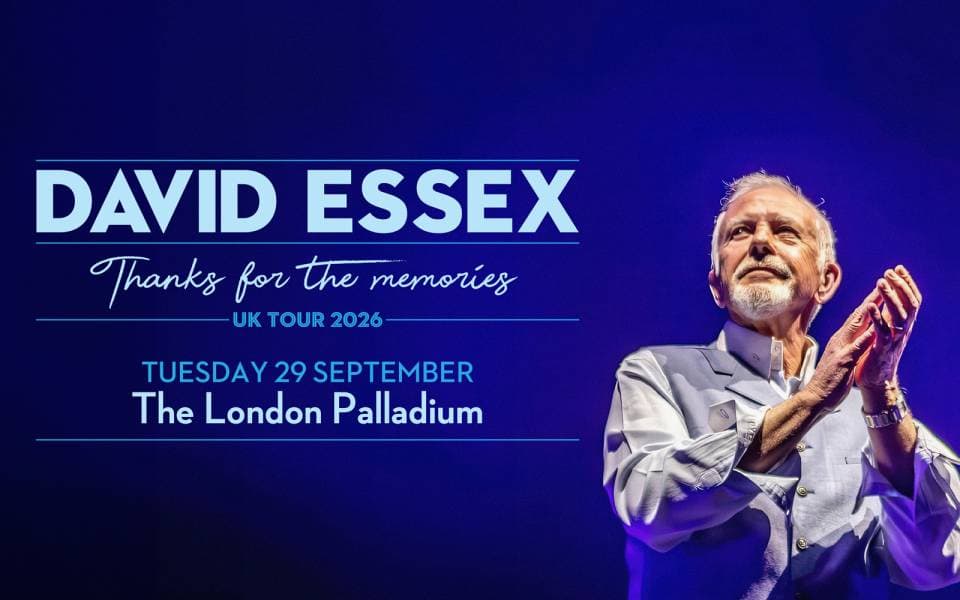
A farewell shaped not by finality, but by gratitude for a lifetime spent turning pop songs into personal memories.
In 2026, David Essex will step back onto the road with the aptly titled “Thanks for the Memories” Tour, a live retrospective that arrives not as a sudden announcement, but as the natural continuation of a career that has always balanced intimacy with mass appeal. While this tour is not tied to a new studio album, it draws its emotional weight from a catalogue that once dominated the UK charts, including multiple Top 10 singles and albums during the 1970s, a period when David Essex stood at the intersection of pop stardom, theatrical storytelling, and generational voice. His breakthrough album Rock On, anchored by the title track that reached No. 1 in the UK and later crossed into the US Top 5, established him as more than a fleeting hitmaker. The 2026 tour reframes that success through the lens of memory rather than momentum.
What makes David Essex unique in the landscape of British pop is not simply his chart performance, but the way his songs embedded themselves into the emotional routines of listeners. Tracks like “Rock On,” “Hold Me Close,” and “Gonna Make You a Star” were not just radio staples; they functioned as emotional shorthand for adolescence, longing, and self invention. The “Thanks for the Memories” Tour acknowledges this bond openly. Its title suggests an artist who understands that legacy is not measured by sales figures alone, but by the quiet persistence of songs that refuse to age out of relevance.
Essex’s dual identity as both pop singer and actor deeply informed his songwriting and performance style. His vocals often carried a conversational softness, as though each song were being confided rather than performed. Lyrically, his work favored emotional clarity over poetic abstraction. He wrote about love not as triumph, but as vulnerability, about fame not as fantasy, but as pressure. These themes resonate even more powerfully now, decades removed from their original cultural moment. The tour becomes, in this sense, a living archive, allowing audiences to hear familiar material reframed by time, experience, and survival.
Culturally, David Essex occupies a rare space. He emerged during a transitional era when British pop was shedding its innocence and learning to coexist with self awareness. Unlike many of his contemporaries, he never relied on reinvention or irony. Instead, he trusted emotional continuity. That trust is precisely what the “Thanks for the Memories” Tour celebrates. It is not positioned as a farewell, but as an acknowledgment of endurance. The songs remain. The audience remains. The connection remains.
For longtime listeners, this tour offers recognition. For newer audiences, it offers context, a reminder that before nostalgia became a commodity, it was simply the accumulation of moments shared between an artist and the people who carried his music forward. In standing on stage once more, David Essex is not asking to be remembered. He is thanking listeners for remembering him all along.