
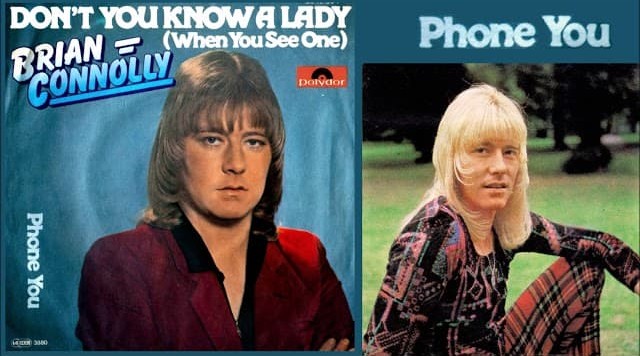
Wounded voice asking for grace, dignity, and recognition after the applause has faded
Released in 1980 as a standalone solo single, “Don’t You Know A Lady” arrived at a fragile moment in the life of Brian Connolly, the once unmistakable voice of The Sweet. Appearing outside the chart dominance that had defined his earlier career and unconnected to any solo album, the song stands as a quiet counterpoint to the stadium sized anthems that made his name. Its commercial impact was modest compared with the towering hits of The Sweet, yet its emotional weight tells a far more intimate story, one that unfolds away from glitter, volume, and certainty.
By 1980, Connolly was no longer the golden haired frontman commanding pop television and roaring crowds. Years of relentless touring, internal band fractures, and serious health struggles had reshaped both his voice and his public standing. “Don’t You Know A Lady” does not attempt to reclaim lost chart territory. Instead, it leans inward. The performance is restrained, almost confessional, revealing an artist keenly aware of time’s cost and reputation’s fragility. For listeners attuned to subtext, the song resonates as a plea not for fame, but for understanding.
Lyrically, the song centers on respect, misjudgment, and emotional blindness. The repeated question embedded in the title is not accusatory, but weary. It suggests a narrator speaking to someone who has failed to see the humanity in front of them, a theme that mirrors Connolly’s own struggle to be seen as more than a relic of glam rock excess. The word “lady” functions less as a character and more as a symbol of dignity itself, something overlooked, perhaps taken for granted, yet deeply felt once endangered.
Musically, the arrangement avoids the flamboyant crunch that once defined The Sweet. The production favors melody and space, allowing Connolly’s voice to carry the narrative. There is a noticeable vulnerability in his delivery. His vocal timbre, altered by illness, adds unintended gravity, transforming what could have been a straightforward adult contemporary track into something more haunting. Each phrase feels earned, shaped by lived experience rather than youthful bravado.
What gives “Don’t You Know A Lady” its lasting power is not innovation or commercial success, but honesty. It captures an artist standing at a crossroads, aware that the spotlight has shifted, yet unwilling to disappear quietly. In this song, Connolly is not performing a role. He is documenting a state of being. For seasoned listeners, especially those who followed his rise and fall, the track reads like an open letter written late at night, when nostalgia and clarity briefly align.
In the broader cultural memory, this single may remain a footnote. But within the vinyl grooves lies a rare artifact of emotional truth. Brian Connolly did not outshout his past here. He spoke to it softly, and in doing so, left behind one of the most revealing recordings of his career.