
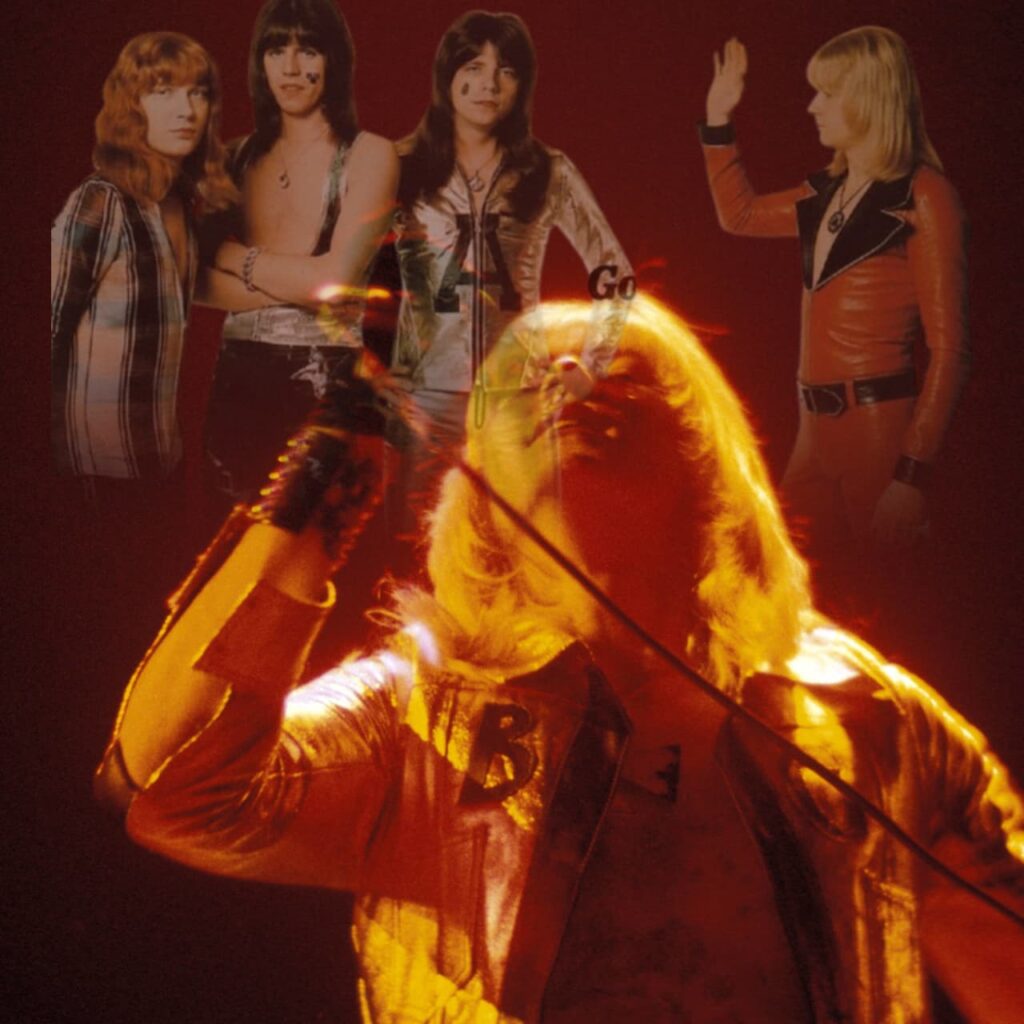
The voice that once turned glitter into thunder steps away, leaving an era to echo without its brightest flame.
When Brian Connolly walked away from Sweet, the departure resonated far beyond a lineup change, because this was the singer whose voice had carried some of the most explosive chart successes of early 1970s glam rock. At their commercial peak, Sweet were not merely popular but dominant. Singles such as “Block Buster!”, “Hell Raiser”, and “The Ballroom Blitz” stormed the UK charts, with “Block Buster!” reaching number one in 1973 and “The Ballroom Blitz” later cracking the US Top Five. These songs found their most enduring home on albums like Desolation Boulevard, a record that crystallized the band’s global breakthrough and positioned Connolly’s rasping, high drama vocal style as the group’s emotional and commercial center.
Connolly’s exit from Sweet marked the end of a specific alchemy. Glam rock, at its best, balanced theatrical excess with brute pop instinct, and Connolly embodied that balance. His voice was neither polished nor traditionally elegant, but it was unmistakable. It sounded lived in, stretched, and urgent, as if every chorus were being sung at the edge of collapse. This quality turned even the band’s most flamboyant material into something strangely human. Beneath the glitter makeup and platform boots, Connolly sang with the desperation of someone who understood that pop glory was fleeting.
By the late 1970s, the glam movement that Sweet had helped define was already receding. Punk had arrived with its scorched earth simplicity, disco ruled the charts, and the industry’s appetite for theatrical rock had shifted. Connolly’s health struggles and personal difficulties further complicated his position within the band. His departure therefore felt less like a dramatic rupture and more like a weary conclusion to a relentless chapter. It was the sound of a voice that had shouted itself hoarse trying to stay ahead of changing tides.
Listening back to the classic Sweet recordings after Connolly’s exit, one hears his absence immediately. The songs remain sharp and professional, but the raw emotional voltage is diminished. Connolly’s vocal persona had been the tension point where teenage fantasy met adult exhaustion. He sang like a man aware that fame was both a costume and a burden, and that awareness gave Sweet their peculiar depth. They were not merely a singles band; they were chroniclers of excess, survival, and the cost of living loudly.
Connolly’s legacy within Sweet is therefore inseparable from the rise and fall of glam rock itself. His voice captured the genre at its most triumphant and most vulnerable. When he left, it signaled not just the end of an era for the band, but a broader cultural shift. The glitter dimmed, the stages grew darker, and pop moved on. Yet those records remain, spinning endlessly, proof that for a brief, incandescent moment, Brian Connolly helped turn glam rock into something immortal.