
A quiet declaration that home is not a place but a rhythm the heart keeps returning to.
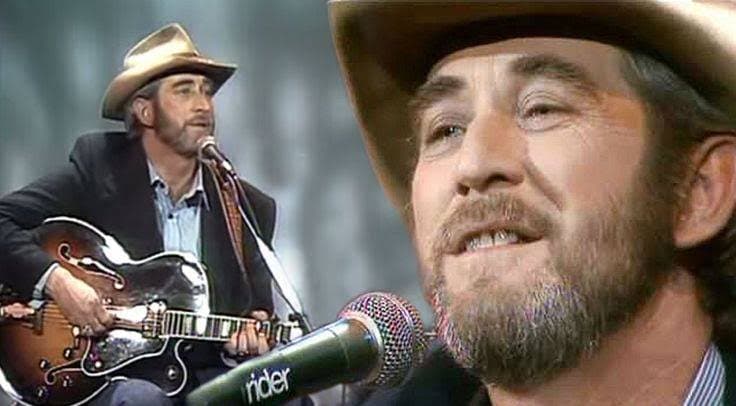
In 1978, Don Williams released “Tulsa Time”, a song that rose to No. 1 on the Billboard Hot Country Singles chart and became one of the defining statements of his career. Originally appearing on the album Expressions, the song quickly established itself as a gentle but resolute anthem of return, a theme that would resonate far beyond its chart life. By the time Don Williams performed “Tulsa Time” on Austin City Limits in 1983, the song had already moved from hit status into something more enduring. It had become part of the emotional vocabulary of country music, and of Williams himself.
The performance on Austin City Limits is especially revealing because it strips away any lingering association with commercial momentum and leaves only meaning. Standing calmly under the studio lights, Don Williams delivers the song with the unforced authority that earned him the title “The Gentle Giant.” There is no urgency in his voice, no need to persuade. The power of “Tulsa Time” lies in its restraint. The narrator is not running away in anger, nor chasing a dream in desperation. He is simply returning to a place that understands him. Tulsa becomes less a city than a symbol of equilibrium, a point on the map where identity and memory align.
Lyrically, “Tulsa Time” operates on a deceptively simple premise. The verses describe a man worn down by the pace and pressures of a different world, one where success demands constant motion and compromise. What makes the song enduring is not the contrast between city and hometown, but the emotional clarity with which Williams frames that contrast. The song does not condemn ambition or experience. It acknowledges them, absorbs them, and then calmly chooses something else. That choice is the heart of the song’s quiet rebellion.
Musically, the arrangement mirrors this emotional logic. The tempo is unhurried, the instrumentation clean and unornamented. Nothing intrudes on the narrative. Each note seems placed with intention, reinforcing the sense that this return is thoughtful rather than impulsive. In the Austin City Limits performance, this balance becomes even more apparent. Live, the song breathes. The pauses matter. The audience is invited not to cheer, but to recognize themselves in the sentiment.
Within Don Williams’ broader catalog, “Tulsa Time” stands as a cornerstone because it encapsulates his artistic philosophy. He sang about ordinary decisions with uncommon dignity. He trusted understatement to carry emotional weight. Watching him perform the song in 1983, years after its chart triumph, reveals why it has lasted. The song no longer needs success to validate it. Its truth has already settled.
For listeners returning to “Tulsa Time” today, especially through the lens of Austin City Limits, the song feels less like a period piece and more like a reminder. In a world that rarely slows down, Don Williams offers a calm assertion that knowing when to go home may be the most important wisdom of all.