
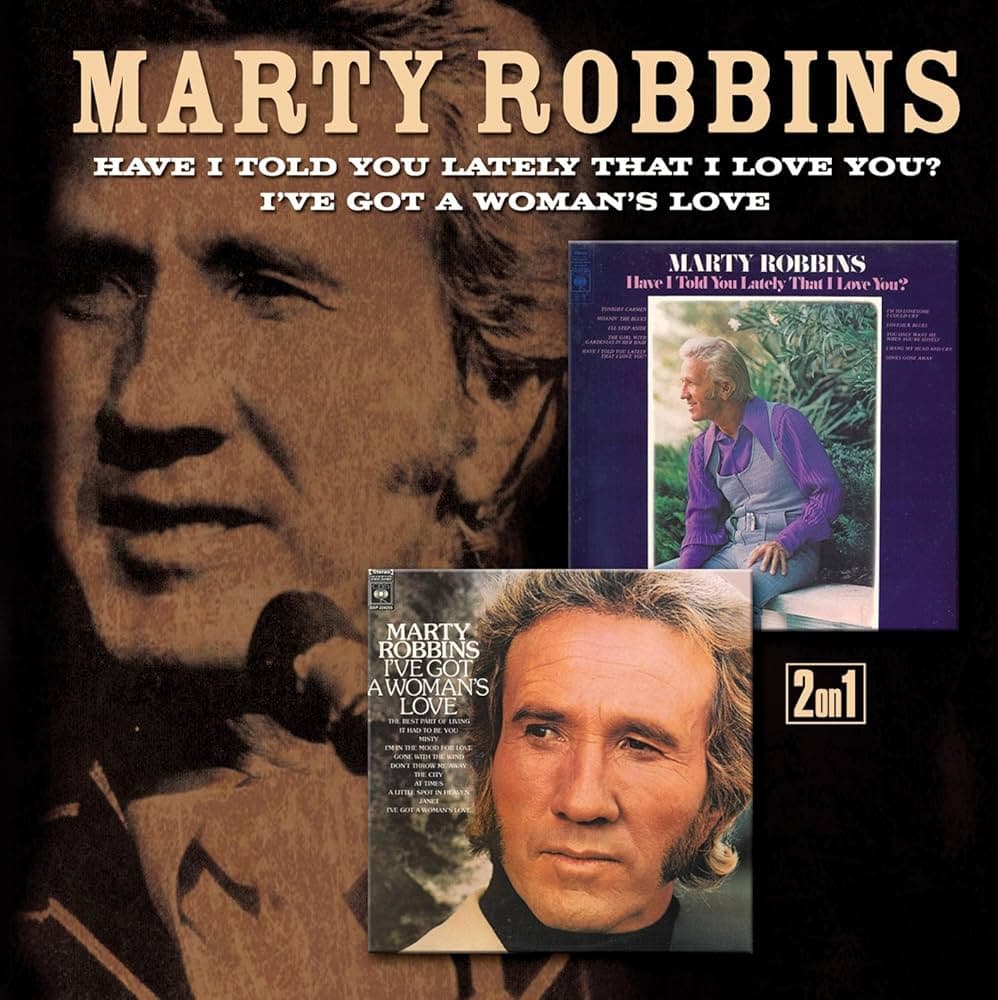
A quiet testament to devotion where love becomes a refuge rather than a conquest
Upon its release, “I’ve Got A Woman’s Love” rose swiftly to the top of the Billboard Hot Country Singles chart, claiming the No. 1 position and affirming Marty Robbins once again as one of country music’s most reliable storytellers. The song appeared on the 1962 album Devil Woman, a record that balanced Robbins’ flair for drama with a growing maturity in emotional perspective. In an era when country hits often leaned toward heartbreak or bravado, this single stood apart by celebrating something far rarer in popular song: quiet, sustaining love.
What makes “I’ve Got A Woman’s Love” endure is not narrative excess but restraint. Robbins does not dramatize romance as a battlefield won or lost. Instead, he frames love as a stabilizing force, a presence that anchors the singer against uncertainty and temptation. The lyrics speak with calm assurance, suggesting a man who understands that fulfillment does not require spectacle. This was a subtle but meaningful shift in country music at the time, reflecting Robbins’ ability to evolve without abandoning tradition.
Musically, the song is built on simplicity. The arrangement is understated, allowing Robbins’ voice to carry the emotional weight. His baritone is warm and measured, never forcing sentiment. There is a confidence in his delivery that suggests lived experience rather than youthful infatuation. This is not love discovered in a moment of passion, but love recognized through time and tested loyalty. Robbins sings like a man who has seen the road and chosen where to stand.
Within the broader context of Marty Robbins’ career, the song occupies an important emotional space. Known widely for gunfighter ballads, tragic narratives, and cinematic storytelling, Robbins here turns inward. The drama is internal, almost domestic. The stakes are not life and death, but peace of mind. That inward turn likely contributed to the song’s resonance with listeners who were aging alongside the genre itself. By the early 1960s, country audiences were expanding beyond youthful rebellion into adult reflection, and Robbins met them there with grace.
The cultural legacy of “I’ve Got A Woman’s Love” lies in its honesty. It does not promise perfection or eternal bliss. Instead, it acknowledges that love’s greatest gift is steadiness. In a genre often fueled by loss, this song dares to suggest that holding on can be as compelling as letting go. That perspective has allowed it to age beautifully, sounding neither dated nor naïve.
Listening today, the song feels like a letter written late at night, after the noise has faded. It reminds us that country music at its best does not merely tell stories of hardship, but also honors the quiet victories. In “I’ve Got A Woman’s Love,” Marty Robbins captured one of those victories with humility and timeless clarity, preserving it in vinyl grooves for anyone willing to listen closely.