
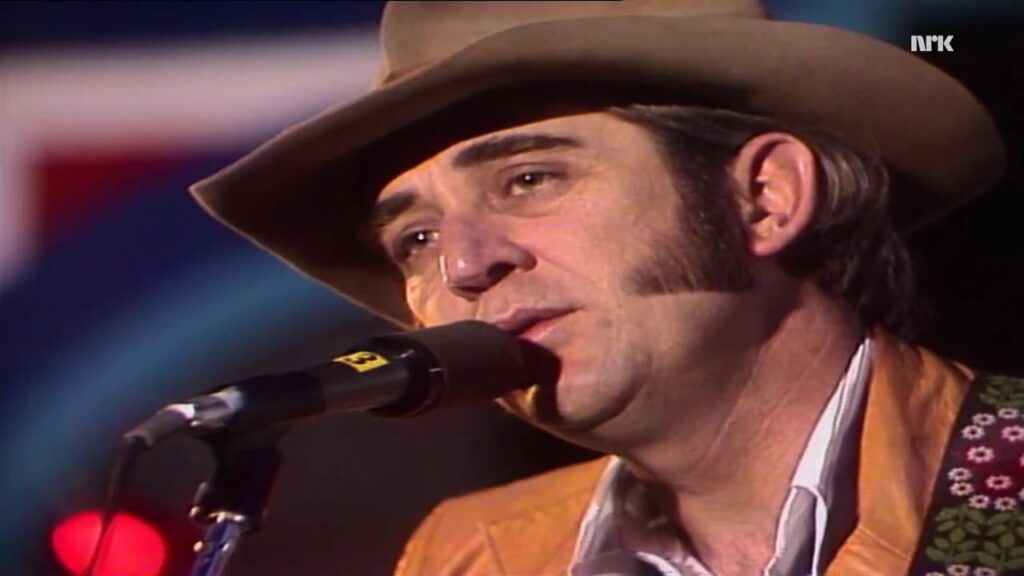
American baritone crossing borders, carrying intimacy into a foreign winter
In 1978, Don Williams arrived in Scandinavia at a moment when his voice already occupied a rare position on the charts and in the hearts of country listeners. By that year, his recordings from albums such as Expressions and Country Boy had established him as a consistent presence on the Billboard country charts, with multiple singles reaching the upper tier and confirming his commercial strength. The Oslo appearance, often referred to as Oslo, Norway 1978, was not tied to a single studio release, but it occurred squarely within the period when Williams was enjoying sustained chart success and international attention. What makes this performance enduring is not a peak position or a sales figure, but the way his catalog translated intact across language and geography, carried by tone rather than spectacle.
The significance of Oslo, Norway 1978 lies in how clearly it reveals the core philosophy of Don Williams as an artist. By the late nineteen seventies, he had already perfected a style that resisted the flash and bravado often associated with American country exports. His singing relied on restraint, a conversational phrasing, and an emotional honesty that asked the listener to lean in rather than be overwhelmed. In Oslo, this approach became even more pronounced. Removed from the familiar cultural shorthand of Southern radio, Williams relied entirely on the universality of feeling. Heartache, steadiness, devotion, and quiet resignation did not need translation.
Listening closely to recordings and accounts from this period, one hears a performer deeply aware of space. Williams allowed silences to breathe. His baritone did not chase emphasis but settled into it. Songs that spoke of ordinary love and private doubt took on a reflective weight in front of an audience encountering them as something both foreign and strangely familiar. This is where Oslo, Norway 1978 becomes more than a tour stop. It becomes a study in how emotional truth travels.
Lyrically, the material Williams was known for during this era avoided melodrama. His characters rarely shouted their pain. They accepted it, carried it, and spoke of it plainly. In a European concert hall, that restraint read as sophistication rather than simplicity. The cultural legacy of this performance rests in that subtle exchange. American country music, often caricatured abroad, was revealed here as introspective, humane, and deeply adult.
There is also an archival poignancy to this moment. The late nineteen seventies represented a high watermark for Williams before the industry shifted toward louder production and sharper edges. Oslo, Norway 1978 captures him in full command of his identity, unpressured, unembellished, and utterly confident that a soft voice could command a room. For listeners today, it stands as a reminder that longevity in music is not built solely on hits, but on the ability to make strangers feel understood. That was Don Williams at his most enduring, standing far from home, sounding exactly like himself.