
Lament for Love Lost to Time, Regret, and the Relentless March of Memory
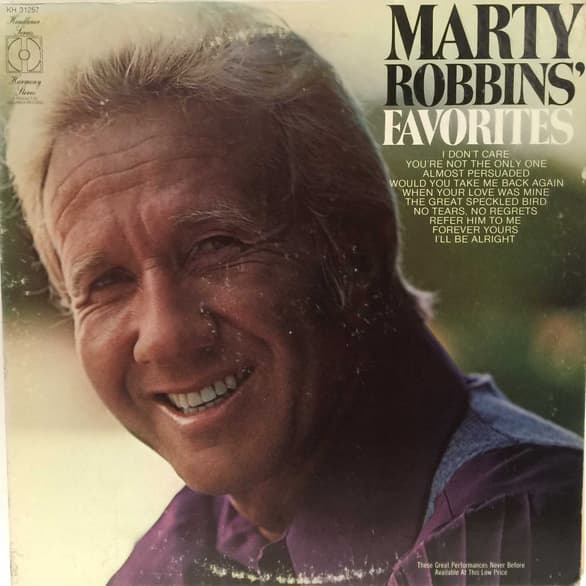
When Marty Robbins released “When Your Love Was Mine” as part of his 1969 album My Woman, My Woman, My Wife, he was already a master craftsman of heartbreak. The album itself would go on to earn a Grammy Award for its title track, and it performed strongly on the country charts, reaffirming Robbins’ stature as one of Nashville’s most eloquent voices. While “When Your Love Was Mine” was not issued as a standalone single, it exists within a record that climbed high on the Billboard Country Albums chart, a testament to Robbins’ enduring popularity at the close of the 1960s.
By this stage in his career, Robbins had moved beyond the gunfighter ballads and Western epics that defined his earlier triumphs. What distinguished this era was restraint. His voice, supple yet seasoned, no longer chased drama for its own sake. Instead, it leaned into introspection. “When Your Love Was Mine” is a study in emotional archaeology. It does not rage against betrayal, nor does it indulge in theatrical sorrow. It remembers.
The song’s narrative rests on a familiar but devastating realization: love, once possessed, has slipped irrevocably into the past. Robbins delivers the lyric not as a wounded youth but as a man quietly surveying the ruins of what once sustained him. The phrasing is deliberate. He lingers on certain syllables as if testing their weight, as though memory itself resists being spoken aloud. In this, Robbins accomplishes something subtle and profound. He transforms nostalgia into accountability. The loss described here feels less like fate and more like consequence.
Musically, the arrangement is classic late-’60s Nashville: warm steel guitar lines, restrained percussion, and orchestration that frames rather than overwhelms. There is space in the production. Space for regret to breathe. Space for silence to echo between lines. This was the genius of Robbins in this period. He understood that heartbreak is not always explosive. Sometimes it is quiet and permanent.
What makes “When Your Love Was Mine” endure is its refusal to offer redemption. There is no promise of reconciliation, no sudden clarity that repairs what has been broken. The past remains the past. Robbins does not dramatize this truth; he accepts it. That acceptance carries a particular sting for listeners who have lived long enough to know that some chapters close without fanfare.
In the vast catalogue of Marty Robbins, this track may not command the spotlight the way his iconic Western sagas do. Yet it stands as a reminder of his versatility. He could narrate duels at high noon, yes, but he could also chronicle the quieter duels fought within the heart. And in “When Your Love Was Mine,” he invites us not merely to recall a lost love, but to confront the moments when we held something precious and let it slip through our hands.