
Restless heart steps into the sun, chasing freedom with nothing but a rhythm and a shrug.
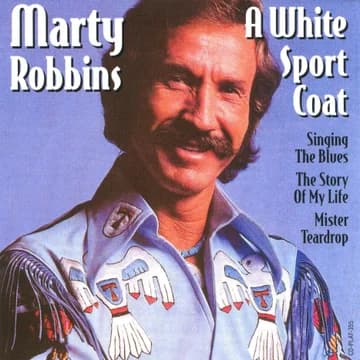
When Marty Robbins recorded “That’s All Right” in 1954, he was still a young artist carving his identity into the burgeoning rockabilly landscape. Though his later reputation would be cemented by towering country ballads and western epics, this early single reveals a different facet of his artistry. Originally popularized by Elvis Presley that same year at Sun Records, the song had already ignited regional excitement and climbed the country and R&B charts in Presley’s hands. Robbins’ interpretation did not eclipse those chart heights, yet its presence within the mid-1950s singles that predated his breakthrough album Gunfighter Ballads and Trail Songs stands as a fascinating document of an artist experimenting with the currents of his time.
The song itself, written by Arthur Crudup, is deceptively simple. At its core lies a declaration of departure, not steeped in melodrama but in resolve. The narrator refuses to be diminished by heartbreak. “That’s all right” becomes both dismissal and liberation. In Robbins’ phrasing, the line carries a subtle Western inflection, a trace of the plains already whispering through his timbre. Where Presley’s version bristled with youthful urgency, Robbins leans into a smoother, almost conversational cadence. His voice does not rebel so much as it releases.
This distinction is telling. In 1954, American popular music stood at a crossroads. Country, blues, gospel, and the first sparks of rock and roll were colliding in small studios and on regional radio stations. Robbins, who would later define narrative songwriting in country music, here engages with the raw architecture of rhythm and blues. The acoustic guitar shuffles forward, upright bass thumps with steady insistence, and the melody loops with hypnotic economy. There is no orchestral sweep, no cinematic flourish. Just the bones of a song and the confidence to let them breathe.
Lyrically, “That’s All Right” offers a study in emotional minimalism. The narrator does not beg, does not accuse, does not dramatize. He simply leaves. In that restraint lies its power. For a generation coming of age in postwar America, the idea of mobility, of movement without apology, held enormous appeal. The song feels like a door opening onto a highway at dusk. You do not know where it leads, but you know you are going.
For listeners familiar with Marty Robbins primarily through the grandeur of “El Paso” or the sweeping narrative ambition of Gunfighter Ballads and Trail Songs, this recording is a reminder that before the mythic gunfights and desert ballads, there was a young man absorbing the sounds of Memphis and the South. “That’s All Right” may not be the cornerstone of his discography, but it captures the restless energy of a future legend testing his stride. In its brisk, unadorned groove, we hear not only a cover of a rising hit, but the early heartbeat of an artist destined to turn simple stories into timeless Americana.