
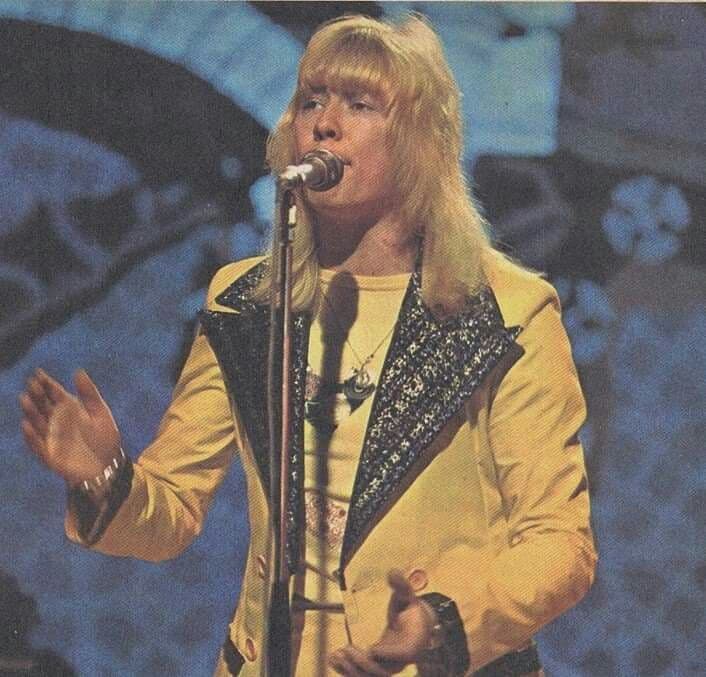
A fleeting season of youth where heat, freedom, and longing collide beneath the restless pulse of the city
Few recordings capture the intoxicating electricity of urban summer quite like “Summer in the City” by Brian Connolly, a powerful reinterpretation that reintroduced the classic song to a new generation of listeners. Originally associated with The Lovin’ Spoonful, whose version reached No. 1 on the Billboard Hot 100 and appeared on the album Hums of the Lovin’ Spoonful, the song carried an enduring legacy long before Connolly’s voice touched it. Yet when Brian Connolly, best known as the unmistakable frontman of The Sweet, stepped into the song, he brought with him a different emotional palette. His interpretation did not simply revisit a beloved classic. It reframed it through the lens of a rock singer who understood both the thrill and exhaustion of life under bright lights.
The original composition by John Sebastian, Mark Sebastian, and Steve Boone was already a masterpiece of atmosphere. From its opening moments, “Summer in the City” establishes a vivid sensory world. The pounding rhythm evokes the relentless heat of concrete streets, while the sound effects famously woven into the arrangement capture the mechanical heartbeat of urban life. Car horns, construction noises, and the pulse of traffic blur into the music, turning the city itself into an instrument. It was one of the earliest examples in pop recording where environmental sound became an integral part of storytelling.
When Brian Connolly approached “Summer in the City,” he inherited not just a melody but an entire emotional landscape. His voice, shaped by years of performing explosive glam rock with The Sweet, possessed a grainy intensity that contrasted beautifully with the song’s restless energy. Where the original carried a youthful urgency, Connolly’s delivery often suggested something deeper. Beneath the excitement of summer nights lay the fatigue of endless days, the push and pull between escape and endurance.
At its heart, “Summer in the City” is a study in contrasts. The verses describe oppressive daylight, when heat radiates from the pavement and patience runs thin. The city becomes claustrophobic, its crowds and noise pressing in from every direction. But the chorus opens the door to transformation. When night arrives, the same streets seem to breathe again. Neon lights flicker to life, music spills from doorways, and the oppressive heat dissolves into possibility.
This duality is precisely what makes the song timeless. The urban summer becomes a metaphor for youth itself. Day represents struggle, ambition, and the grind of daily survival. Night offers liberation, romance, and fleeting moments of magic. Brian Connolly, a performer who lived much of his life on stages illuminated by electric light, understood that tension instinctively.
His connection to “Summer in the City” therefore feels more than interpretive. It feels personal. Connolly’s career carried him through the roaring heights of glam rock stardom and the quieter, more reflective years that followed. In that context, the song’s imagery of exhaustion melting into nocturnal freedom takes on an almost autobiographical resonance.
Listening to Brian Connolly sing “Summer in the City,” one hears not just a cover of a classic composition, but a reminder of how songs evolve as they pass through different voices. The city remains the same. The heat still rises from the asphalt. But the story gains new shades of meaning each time another artist walks those crowded streets and sings beneath the neon sky.