
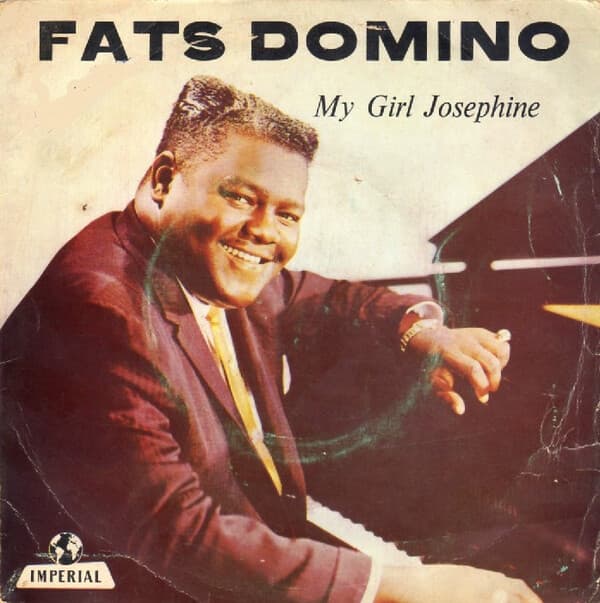
A rolling celebration of love and rhythm where joy feels effortless and every piano note carries the heartbeat of New Orleans
When Fats Domino released My Girl Josephine in July 1960, the song arrived during a period when he was already firmly established as one of the defining architects of early rock and roll. Following the enormous success of recordings tied to albums such as This Is Fats Domino!, Domino had become a rare artist capable of crossing boundaries between rhythm and blues, pop, and rock audiences with remarkable ease. My Girl Josephine, which achieved strong chart success on both the pop and R&B charts, further demonstrated the unique warmth and rhythmic instinct that made his music so enduring.
Originally adapted from a song by Dave Bartholomew and Fats Domino, the recording carries all the essential elements that defined Domino’s artistry. Yet what makes My Girl Josephine especially compelling is its atmosphere of pure movement. Unlike dramatic ballads or emotionally conflicted love songs, this track exists almost entirely within the realm of pleasure. It swings, rolls, and dances forward with such natural ease that the listener hardly notices how carefully constructed it truly is.
At the center of the song is Domino’s unmistakable piano work. His playing never relied on technical showmanship in the traditional sense. Instead, it carried a rhythmic intelligence rooted deeply in New Orleans musical traditions. Boogie-woogie, blues, jazz, and Caribbean influences blend seamlessly together in the performance, creating a groove that feels both relaxed and unstoppable. The piano does not simply accompany the song. It drives its entire emotional identity.
Vocally, Fats Domino approaches the lyric with characteristic warmth and informality. His voice always carried a profoundly human quality, free from pretension or theatrical strain. In My Girl Josephine, that ease becomes infectious. He sounds less like a performer attempting to impress an audience and more like someone genuinely enjoying the music unfolding around him. That authenticity became one of Domino’s greatest strengths throughout his career.
Lyrically, the song remains wonderfully uncomplicated. The affection expressed toward Josephine is playful, direct, and rooted in everyday emotional immediacy rather than poetic abstraction. This simplicity was essential to Domino’s appeal. His music often celebrated ordinary pleasures without irony or emotional overstatement. In doing so, it created an atmosphere listeners could enter comfortably rather than merely observe.
The stereo recording associated with the July 1960 release also highlights the musical texture beautifully. The separation allows the rhythmic interplay between piano, horns, percussion, and vocals to breathe more fully, emphasizing how deeply collaborative Domino’s recordings often were. His music always depended on ensemble feel as much as individual performance.
There is also a broader cultural significance to My Girl Josephine within the evolution of rock and roll itself. By 1960, popular music was already diversifying rapidly, yet Domino’s recordings retained a direct connection to the foundational rhythms from which rock music emerged. His sound remained rooted in dance, community, and emotional accessibility at a time when the genre was beginning to expand stylistically.
What lingers after the song fades is not dramatic emotional revelation, but happiness. The feeling of music created not to overwhelm the listener with complexity, but to invite them into rhythm itself.
And within the rolling piano lines and effortless charm of My Girl Josephine, Fats Domino reminds us of something essential about early rock and roll at its best. That joy, when expressed honestly enough, can become timeless.