
A rock and roll dream where love feels simple, bright, and only three steps away
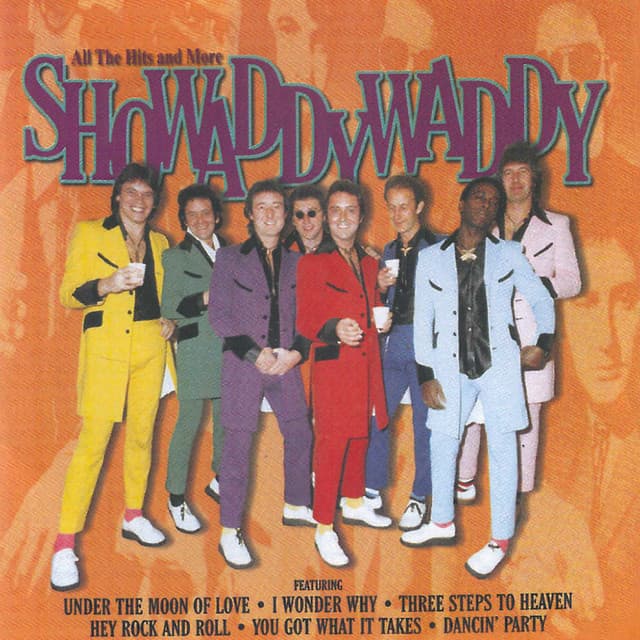
When Showaddywaddy released their exuberant revival of Three Steps to Heaven, the record quickly reaffirmed the band’s remarkable ability to breathe new life into the golden age of rock and roll. Issued in 1975 as part of the album Step Two, the single climbed to No. 2 on the UK Singles Chart, becoming one of the group’s most beloved hits. Though the song had first been recorded by Eddie Cochran in 1960, Showaddywaddy transformed it into a vibrant anthem for a new generation, preserving the innocence of early rock while giving it the polished energy of the mid-1970s revival movement.
To understand the enduring appeal of Three Steps to Heaven, one must first appreciate the delicate charm of its premise. The song presents love not as a complicated or painful journey, but as something astonishingly clear and attainable. Find the right girl. Fall in love. Get married. Three simple steps, the lyric suggests, and suddenly heaven is within reach. It is a notion that might appear naïve on the surface, yet within the context of rock and roll’s earliest storytelling traditions, that simplicity is precisely the point.
By the time Showaddywaddy recorded the song, the group had already built their reputation as devoted custodians of 1950s and early 1960s rock culture. Formed in Leicester, they carried the spirit of jukebox harmonies, doo-wop rhythms, and bright guitar riffs into an era increasingly dominated by glam spectacle and progressive experimentation. In that landscape, their music felt almost defiantly nostalgic. Three Steps to Heaven embodied this philosophy perfectly. Rather than reinvent the original, the band leaned into its joyful structure, amplifying the hand-claps, tightening the harmonies, and delivering the melody with infectious enthusiasm.
What gives the song its emotional durability is the way it captures a particular vision of romantic optimism that defined early rock music. There is no cynicism here, no tangled heartbreak. Instead, the narrator speaks with the wide-eyed conviction of someone standing at the threshold of adulthood, believing wholeheartedly that happiness follows a clear and beautiful path. In the voice of Showaddywaddy, that optimism becomes communal. Their layered vocals turn the lyric into something shared, almost like a street-corner chorus echoing through time.
Yet beneath the buoyant rhythm lies something quietly profound. Songs like Three Steps to Heaven remind listeners why early rock and roll resonated so deeply with young audiences in the first place. They distilled complicated emotions into melodies that felt immediate and universal. The dream of love, marriage, and a hopeful future was not merely sentimental storytelling. It was a reflection of the aspirations carried by an entire generation.
More than four decades later, Showaddywaddy’s version continues to sparkle with the same carefree energy that first carried it up the charts. In reviving Three Steps to Heaven, they did more than reinterpret a classic. They preserved a piece of rock and roll’s youthful heart, reminding listeners that sometimes the most powerful songs are the ones brave enough to believe that happiness can be simple.