
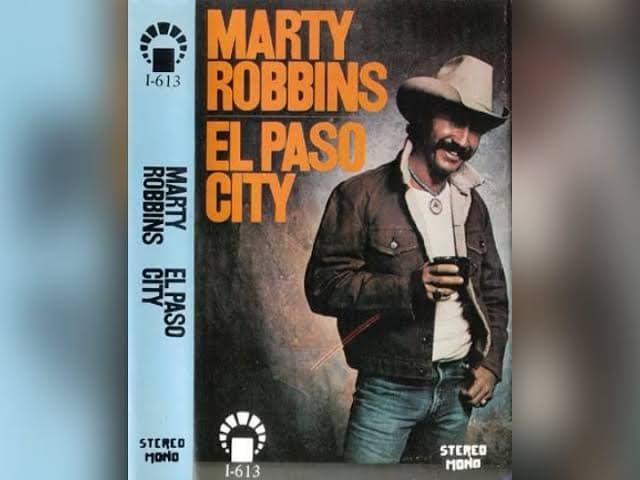
The Ballad That Turned the American West Into a Ghost Story Set to Music
When Marty Robbins released “El Paso” in 1959 as part of the landmark album Gunfighter Ballads and Trail Songs, country music suddenly felt cinematic in a way it never had before. The single climbed to No. 1 on the Billboard Hot Country Songs chart and, remarkably, also reached No. 1 on the Billboard Hot 100, a rare crossover achievement for a western ballad at the dawn of the 1960s. More than a hit record, “El Paso” became a cultural event. Its success proved that audiences would still surrender themselves to storytelling, even when the story unfolded slowly, tragically, and with the fatalism of an old frontier legend.
Among the countless live renditions and televised appearances now scattered across YouTube, the performances that resonate most deeply are often not the technically polished ones, but the versions where Robbins appears completely absorbed in the narrative itself. He never sang “El Paso” like a standard country tune. He sang it like a man remembering something he barely survived. That distinction is what separates the song from ordinary hits of its era.
At nearly five minutes long, the original recording defied commercial logic. Radio programmers initially resisted it because of its length. Yet listeners were captivated almost immediately. The song unfolds like a short western film: jealousy, violence, escape, longing, and death, all wrapped inside a melody carried by nylon-string guitar and Robbins’ hauntingly calm vocal delivery. Unlike the louder western imagery common in Hollywood at the time, “El Paso” feels intimate and doomed from the very first line. The dusty streets, the cantina atmosphere, the fatal attraction to Feleena, all of it feels less like fantasy and more like memory.
Part of the song’s enduring power comes from Robbins’ extraordinary restraint as a storyteller. He never overplays the drama. When the narrator shoots another man over Feleena, Robbins delivers the moment almost casually, which somehow makes it even more shocking. The violence arrives the way violence often does in real life: sudden, irreversible, and emotionally unfinished. From that moment onward, the song becomes less about romance and more about destiny. The narrator cannot stay away from El Paso because he already understands that love and death have become inseparable.
Musically, “El Paso” was also revolutionary in subtle ways. The arrangement blended country, Mexican folk influences, and cinematic western orchestration without feeling artificial. Robbins had grown fascinated with western culture since childhood, and throughout Gunfighter Ballads and Trail Songs, he approached the genre with unusual sincerity rather than novelty. That authenticity is why the song never feels like costume music. It feels lived in.
The finest YouTube performances often reveal something crucial about Robbins himself: his stillness. Unlike many entertainers of the era, he did not rely on exaggerated gestures to command attention. He stood almost motionless, allowing the narrative to do the work. That calm presence mirrored the emotional architecture of the song. The narrator knows from the beginning that this story can only end one way.
Decades later, “El Paso” remains one of the greatest narrative recordings in American music because it trusts the listener’s imagination. It paints landscapes without over-describing them. It expresses heartbreak without sentimentality. And in its final moments, as the dying narrator falls beside Feleena, the song achieves something rare in popular music: tragedy delivered with dignity instead of spectacle.
That is why the best version on YouTube is often whichever performance captures Robbins at his most emotionally restrained. Because “El Paso” was never simply about gunfighters or romance. It was about obsession powerful enough to pull a man back toward the very place he knows will destroy him.