
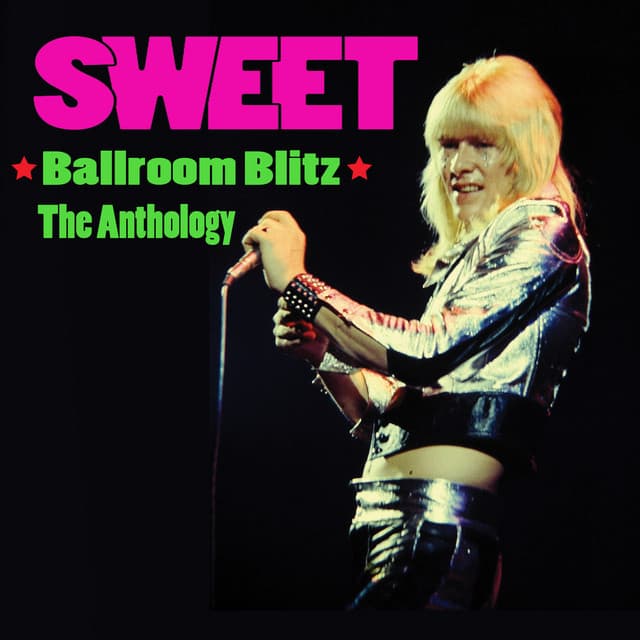
A burst of youthful desire wrapped in glittering sound, where innocence and urgency collide on the edge of pop euphoria
When Sweet released Little Willy in 1972, it surged to No. 4 on the UK Singles Chart and climbed even higher to No. 3 on the US Billboard Hot 100, marking a decisive breakthrough for the band’s international profile. Emerging during the era surrounding their debut album Funny How Sweet Co-Co Can Be, the song stands as one of the clearest early signals of Sweet’s transformation from crafted pop outfit into architects of what would soon be recognized as glam rock’s most infectious and commercially potent form.
At first listen, Little Willy feels deceptively simple. Its buoyant rhythm, bright piano accents, and singalong chorus create an atmosphere of almost reckless joy. Yet beneath that polished exterior lies a fascinating tension. The songwriting, shaped by the prolific team of Nicky Chinn and Mike Chapman, thrives on immediacy, but it also hints at something more restless. The titular “Willy” becomes less a literal character and more an embodiment of youthful longing, impulsive, eager, and driven by instincts not yet tempered by consequence.
The structure of the song is a masterclass in pop economy. Each section arrives with precision, never overstaying its welcome, yet leaving a lasting imprint. The chorus, in particular, operates like a release valve, exploding with melodic clarity after tightly wound verses. In a studio context, especially in rarer or alternate takes, one can detect the meticulous layering that defined Sweet’s early recordings. Harmonies are stacked with near mechanical precision, guitars shimmer without overwhelming, and the rhythm section pulses with an almost danceable insistence.
But what elevates Little Willy beyond its chart success is its place within a broader cultural shift. Early 1970s Britain was witnessing the birth of glam rock, a movement that blurred gender norms, theatricality, and musical boundaries. While later acts would lean heavily into visual spectacle, Sweet captured something more immediate in this track: the sound of pop music beginning to shed its innocence while still clinging to its accessibility.
Lyrically, the song dances around themes of pursuit and desire without ever becoming explicit. This ambiguity is key to its enduring appeal. It allows listeners to project their own interpretations, whether hearing it as a playful flirtation or a coded expression of adolescent urgency. The repetition of the central name becomes almost hypnotic, reinforcing the song’s sense of fixation, as though the narrator is caught in a loop of longing he cannot escape.
In retrospect, Little Willy occupies a pivotal moment in Sweet’s evolution. It precedes the heavier, more assertive sound they would later embrace, yet it already contains the DNA of that transformation. The hooks are sharper, the energy more insistent, the identity more defined.
Decades on, the song remains a vivid artifact of a time when pop was learning to be louder, bolder, and just a little more dangerous, without ever losing its ability to make you sing along.