
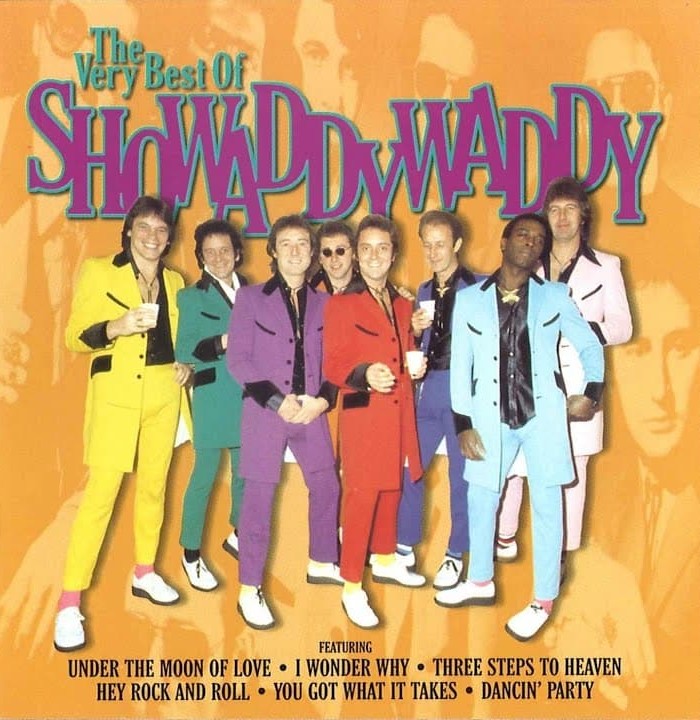
A joyful revival of innocence where old melodies return not as memories, but as living celebrations of youth itself
When Showaddywaddy performed Pretty Little Angel Eyes on Top of the Pops in October 1978, they were reaffirming their role as one of Britain’s most successful revivalist acts, a band that had transformed nostalgia into a thriving pop phenomenon. Originally a hit for Curtis Lee in the early 1960s, the song found new life through Showaddywaddy’s version, which climbed high on the UK Singles Chart and became another major success in their remarkable run of late-1970s hits. By this stage, the group had perfected a unique formula. They were not simply recreating the past. They were reintroducing the emotional immediacy of early rock and roll to a generation living through a very different musical era.
The Top of the Pops appearance captures this balance perfectly. The late 1970s in Britain were increasingly dominated by punk, disco, and emerging new wave experimentation, yet Showaddywaddy remained defiantly committed to melody, harmony, and uncomplicated romantic exuberance. In another context, such devotion to older musical traditions might have seemed outdated. Instead, the band made it feel timeless.
At the heart of Pretty Little Angel Eyes lies a kind of emotional simplicity that modern music often struggles to sustain without irony. The song celebrates admiration and youthful affection without complication or cynicism. There are no emotional games, no dramatic tensions, no existential undertones. Just joy. And that sincerity becomes its greatest strength.
Musically, the performance radiates energy from the opening moments. The rhythm moves with buoyant confidence, driven by the band’s characteristic blend of rock and roll revivalism and polished pop accessibility. Harmonies remain central, echoing the vocal traditions of doo-wop and early 1960s rock while still carrying the larger, more polished sound expected of late-1970s television performance.
Vocally, Showaddywaddy approaches the song with enthusiasm rather than reverence. They understand that revival music cannot survive on imitation alone. It requires vitality. Their delivery feels alive, playful, and fully committed to the emotional atmosphere of the song. This is not nostalgia presented as museum preservation. It is nostalgia turned back into celebration.
The visual dimension of the Top of the Pops performance adds another layer to the song’s impact. Television appearances during this period carried enormous cultural significance, transforming songs into shared national experiences. Watching Showaddywaddy perform, one sees not only musicians, but entertainers deeply aware of audience connection. Their stage presence combines retro style with contemporary confidence, creating an atmosphere that feels communal rather than distant.
There is also something culturally revealing about the continued success of songs like Pretty Little Angel Eyes during the late 1970s. At a time when much of popular music was becoming more aggressive, fragmented, or technologically driven, audiences still responded deeply to harmony-driven optimism. Showaddywaddy tapped into that desire for emotional familiarity without reducing it to parody.
What lingers after the performance ends is not merely affection for a catchy revival hit, but recognition of something deeper. The endurance of musical innocence. The idea that certain melodies and emotions remain permanently accessible no matter how dramatically culture changes around them.
And beneath the bright studio lights of Top of the Pops, Showaddywaddy did something deceptively powerful. They reminded audiences that joy, when delivered sincerely enough, never truly goes out of style.