
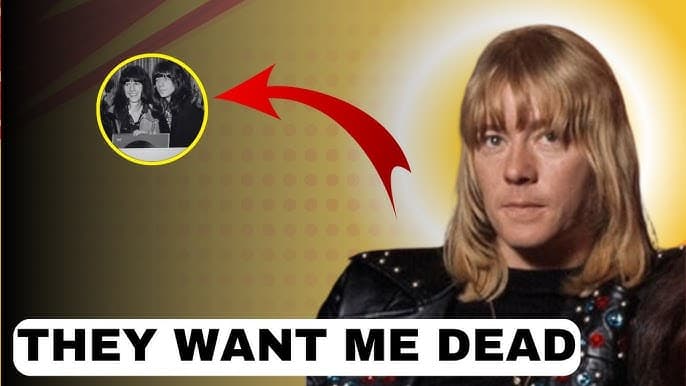
A fallen voice reflecting on fame, fracture, and the painful distance between brotherhood and survival
By the final years of his life, Brian Connolly, the unmistakable voice of Sweet, had become one of rock music’s most tragic and revealing figures. Once the charismatic frontman behind explosive glam rock anthems tied to albums such as Desolation Boulevard and Give Us a Wink, Connolly spent much of his later life carrying the emotional and physical consequences of fame, conflict, addiction, and estrangement. The things he admitted publicly before his death were not dramatic confessions designed for spectacle. They were quieter, sadder reflections from a man looking back at the wreckage left behind after success faded and relationships fractured.
What made Connolly’s reflections so compelling was their honesty about isolation. During Sweet’s rise in the early and mid-1970s, the band projected energy, flamboyance, confidence, and youthful chaos. Songs like Ballroom Blitz, Fox on the Run, and Teenage Rampage became massive international hits, presenting Sweet as larger-than-life figures built for noise, lights, and collective excitement. Yet behind that image existed internal tensions that gradually pulled the group apart.
Connolly openly acknowledged how success altered personal dynamics within the band. Financial disagreements, creative conflicts, and the pressures of constant touring slowly eroded the sense of unity that once defined Sweet’s chemistry. Perhaps most painfully, he admitted that the camaraderie audiences imagined was not always sustainable under the realities of fame. The distance between public image and private exhaustion became impossible to ignore.
There was also deep vulnerability in the way Connolly reflected on his own decline. His struggles with alcoholism became increasingly severe during the late 1970s and 1980s, affecting both his health and his voice. For a singer whose identity had been inseparable from the power and sharpness of that voice, the deterioration carried devastating emotional weight. Connolly did not always frame these struggles with bitterness. More often, his reflections suggested regret and weariness. The sense of a man aware that parts of his life had slipped beyond recovery long before he fully understood the cost.
What makes these admissions emotionally significant is that they challenge the common mythology surrounding glam rock itself. Glam often projected excess, pleasure, rebellion, and spectacle, but Connolly’s later reflections revealed the human fragility hidden beneath those surfaces. The costumes, lights, and choruses could not protect anyone from loneliness, addiction, or emotional collapse.
Yet despite everything, Connolly never entirely rejected Sweet’s legacy. Even amid personal pain and fractured relationships, there remained pride in what the band achieved musically. He understood that beneath glam rock’s glitter, Sweet had created songs with genuine melodic strength and lasting emotional energy. That tension between pride and sorrow defines much of his later public reflections.
There is something profoundly moving about hearing an artist speak honestly near the end of life about the realities behind success. Connolly’s admissions were not polished narratives designed to preserve myth. They felt human. Imperfect. Sometimes contradictory. But deeply real.
And perhaps that is why his story continues to resonate so strongly decades later. Because behind the explosive choruses and dazzling stage persona stood a man confronting the same truths that haunt so many artists after the applause fades. That fame can magnify weakness as easily as talent, and that the bonds created in music are not always strong enough to survive the weight placed upon them.
In the end, Brian Connolly left behind more than glam rock hits. He left behind a cautionary portrait of brilliance touched by vulnerability, where the brightest voices sometimes carry the deepest wounds long after the music stops.