
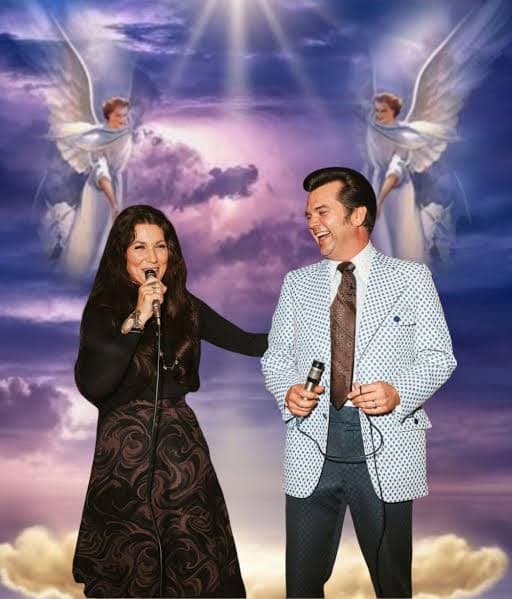
A Promise Worth More Than Money, Sung With the Quiet Certainty of a Working Man’s Heart
When Conway Twitty recorded “Above And Beyond (The Call Of Love)”, he was drawing from one of country music’s most enduring emotional traditions: the humble love song built not on grand poetry, but on devotion spoken plainly and honestly. The song, originally written by the legendary songwriter Harlan Howard, first gained major recognition through Buck Owens, whose 1960 version became a Top 3 country hit and helped define the emerging Bakersfield sound. Twitty’s interpretation later appeared among the rich body of recordings collected in releases such as The Conway Twitty Touch, where his voice gave the song an altogether different emotional gravity.
What makes “Above And Beyond (The Call Of Love)” so enduring is its refusal to hide behind complexity. Harlan Howard, the man who famously described country music as “three chords and the truth,” built the song around a simple declaration: love is not measured by wealth, status, or charm, but by sacrifice and reliability. That philosophy runs through every line. The narrator knows he cannot compete materially. He has no riches to offer, no glamorous promises. What he gives instead is something deeper, almost sacred in its sincerity: loyalty beyond obligation.
In Conway Twitty’s hands, that sentiment acquires a particular tenderness. Before he became the towering figure of romantic country balladry in the 1970s and early 1980s, Twitty possessed a voice shaped equally by rockabilly swagger and Southern vulnerability. Here, he strips away showmanship. He sings as though he is speaking directly across a kitchen table late at night, trying to convince someone that emotional steadiness still matters in a changing world.
That understated quality is precisely why the recording lingers. Country music has always understood that the most devastating emotions are often delivered softly. Twitty does not oversell the lyric. He leans into its humility. The phrase “above and beyond” becomes less a boast than a vow from a man aware of his limitations, yet determined to love with everything he has.
There is also something profoundly American about the song’s emotional architecture. Emerging from the postwar era of working-class country music, it reflects a generation that valued endurance over spectacle. Men in these songs rarely described themselves as heroes. They were laborers, drifters, lonely dreamers, people surviving economic uncertainty while trying to hold onto dignity through love. The narrator of “Above And Beyond (The Call Of Love)” belongs to that lineage completely. He believes affection should be earned through action, not performance.
Musically, the song moves with a bright, deceptively light rhythm, yet beneath that bounce lies quiet desperation. That contrast became one of the great strengths of classic country songwriting. Pain was often hidden inside melodies that sounded cheerful enough for a dancehall jukebox. Conway Twitty understood that balance instinctively. His phrasing carries warmth, but also the faint ache of a man who knows devotion does not always guarantee security.
Decades later, the song still resonates because its emotional core remains timeless. In an age increasingly dominated by irony and emotional distance, “Above And Beyond (The Call Of Love)” feels almost radical in its sincerity. It speaks from a world where promises mattered, where love was proven through constancy, and where a man’s greatest offering was simply the assurance that he would stay.