
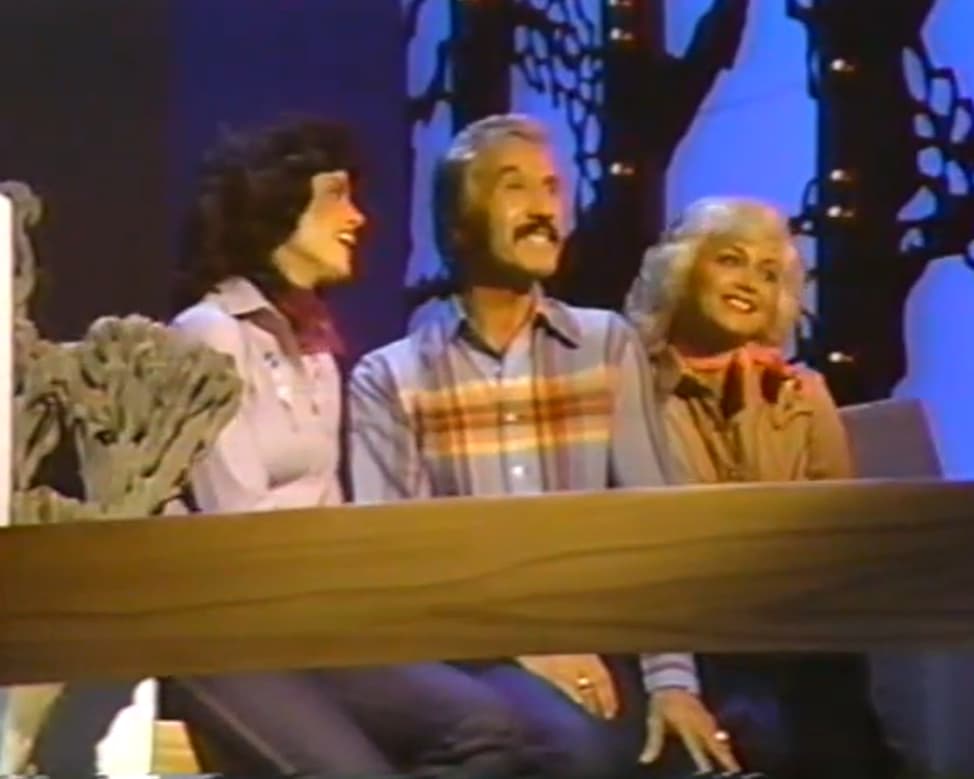
In 1980, Marty Robbins Stood Before Television Cameras Like a Man Carrying the Last Echo of the American West
By the time Marty Robbins appeared on television in 1980—most memorably during his season-five performance on Austin City Limits—he was no longer chasing chart dominance. He had already lived through the golden decades of country music, already earned his place through towering classics like “El Paso,” “Big Iron,” and “My Woman, My Woman, My Wife.” His legacy had been secured through decades of hit records with Columbia Records, Grammy recognition, and an enduring reputation as one of country music’s most cinematic storytellers. Yet those 1980 performances carried something more valuable than commercial momentum: they revealed an artist aging with dignity, refinement, and emotional gravity.
Watching Marty Robbins in that era is like opening a faded leather-bound novel whose pages still smell faintly of dust, tobacco, and desert wind. The voice remained astonishingly controlled—smooth, warm, and deliberate—but there was now an unmistakable weariness beneath it. Not weakness. Experience. The kind that only arrives after years spent carrying heartbreak, mythology, patriotism, loneliness, and the vast emotional landscape of American country music across one’s shoulders.
Television performances from 1980 capture Robbins in a fascinating artistic twilight. Country music itself was changing rapidly. The polished “Urban Cowboy” movement was beginning to reshape Nashville, while outlaw country had already disrupted the older establishment during the previous decade. Yet Robbins never sounded outdated. He sounded eternal. His music existed outside trend cycles because it was rooted in narrative tradition rather than fashionable production. He sang songs as though he had personally lived every mile of highway and every gunfight hidden within them.
What made these performances unforgettable was not spectacle, but restraint. Robbins understood something many performers never learn: stillness can be more commanding than theatricality. He stood calmly beneath studio lights and allowed the songs to breathe. His phrasing carried the patience of an old actor delivering lines he no longer needed to dramatize because he had become them.
In performances of western ballads and reflective love songs alike, Robbins projected the image of a man deeply aware of mortality. That awareness becomes haunting in retrospect. Only two years later, in 1982, the world would lose him following severe heart complications. But in 1980, there remained a quiet fire in him—a performer still devoted to precision, still honoring the storytelling craft that had defined his life since the 1950s.
The emotional power of those televised appearances lies in their honesty. Robbins never attempted to reinvent himself for a younger audience. He did not dilute the western imagery, soften the melancholy, or modernize the soul of his music. Instead, he carried forward the traditions he loved: cowboy ballads, orchestral country arrangements, and songs built on moral conflict and emotional consequence. In an industry increasingly obsessed with immediacy, Robbins still sang like a historian.
There is also something profoundly cinematic about revisiting these performances today. The camera lingers on his face, and you can see decades of American music history etched into every expression. This was not merely a singer delivering old hits on television. This was one of country music’s last great wandering storytellers standing before the nation one more time, preserving a disappearing emotional language.
For listeners who return to Marty Robbins now, those 1980 appearances feel less like nostalgia and more like preservation—a final season of grace from an artist who understood that country music was never simply about charts or trends. It was about memory. It was about loneliness under wide skies. It was about the fragile dignity of ordinary people trying to survive love, regret, and time itself. And few artists ever carried those truths with more elegance than Marty Robbins.