
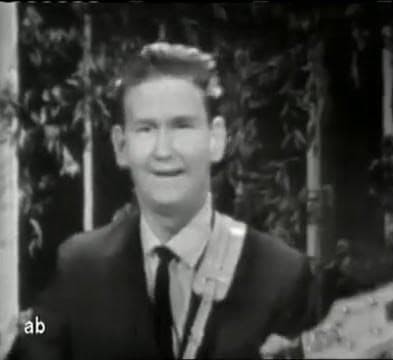
A lonely heart had never sounded so majestic—or so heartbreakingly human.
When Roy Orbison released “Only the Lonely (Know the Way I Feel)” in 1960, popular music gained one of its defining emotional landmarks. The single climbed to No. 2 on the U.S. Billboard pop chart and reached No. 1 in the United Kingdom, becoming Orbison’s first major international breakthrough and the song that introduced the world to the dramatic vocal style that would soon make him a legend. Originally issued as a single and later featured on Lonely and Blue, the recording marked the moment when Roy Orbison stepped beyond conventional rock and roll and created something uniquely his own—a sound suspended between pop, opera, country, and pure heartbreak.
The story of “Only the Lonely” is, in many ways, the story of Orbison discovering his artistic identity. Co-written with Joe Melson, the song arrived during a period when rock music was largely defined by youthful confidence, rebellion, and swagger. Orbison chose a different path. Rather than projecting strength, he embraced vulnerability. He sang not as the triumphant lover, but as the abandoned one—the man left alone with memories, regret, and an aching silence that words can barely describe.
What makes the song extraordinary more than six decades later is the way it transforms loneliness into something almost cinematic. The opening vocal phrases feel less like an introduction and more like a curtain slowly rising on a private tragedy. Orbison’s voice moves from quiet resignation to soaring anguish, creating an emotional arc that was unlike anything dominating the charts in 1960. Instead of relying on rhythm or youthful energy, the record builds its power through tension, atmosphere, and emotional release.
The lyrics themselves are deceptively simple. They do not tell a complicated story, nor do they offer dramatic twists. Their brilliance lies in their universality. Orbison sings for those who have experienced the peculiar isolation that follows heartbreak—the realization that sympathy from others can never fully capture the depth of personal loss. The title phrase becomes more than a lyric; it becomes a shared confession among the wounded.
Musically, the record helped establish the signature Orbison formula that would later produce classics such as “Running Scared,” “Crying,” and “In Dreams.” Sweeping arrangements, dramatic dynamics, and a voice capable of conveying both fragility and grandeur turned a simple heartbreak ballad into a work of emotional architecture. The performance feels almost operatic, yet never loses its intimacy.
More than a hit record, “Only the Lonely” changed the emotional vocabulary of popular music. It proved that vulnerability could be powerful, that sadness could be majestic, and that a singer did not need to hide his pain to command an audience. Listening today, one can still hear the moment when Roy Orbison transformed loneliness from a private sorrow into a timeless work of art—one that continues to resonate with anyone who has ever loved deeply and lost.