
A meditation on progress, uncertainty, and the uneasy promise of tomorrow
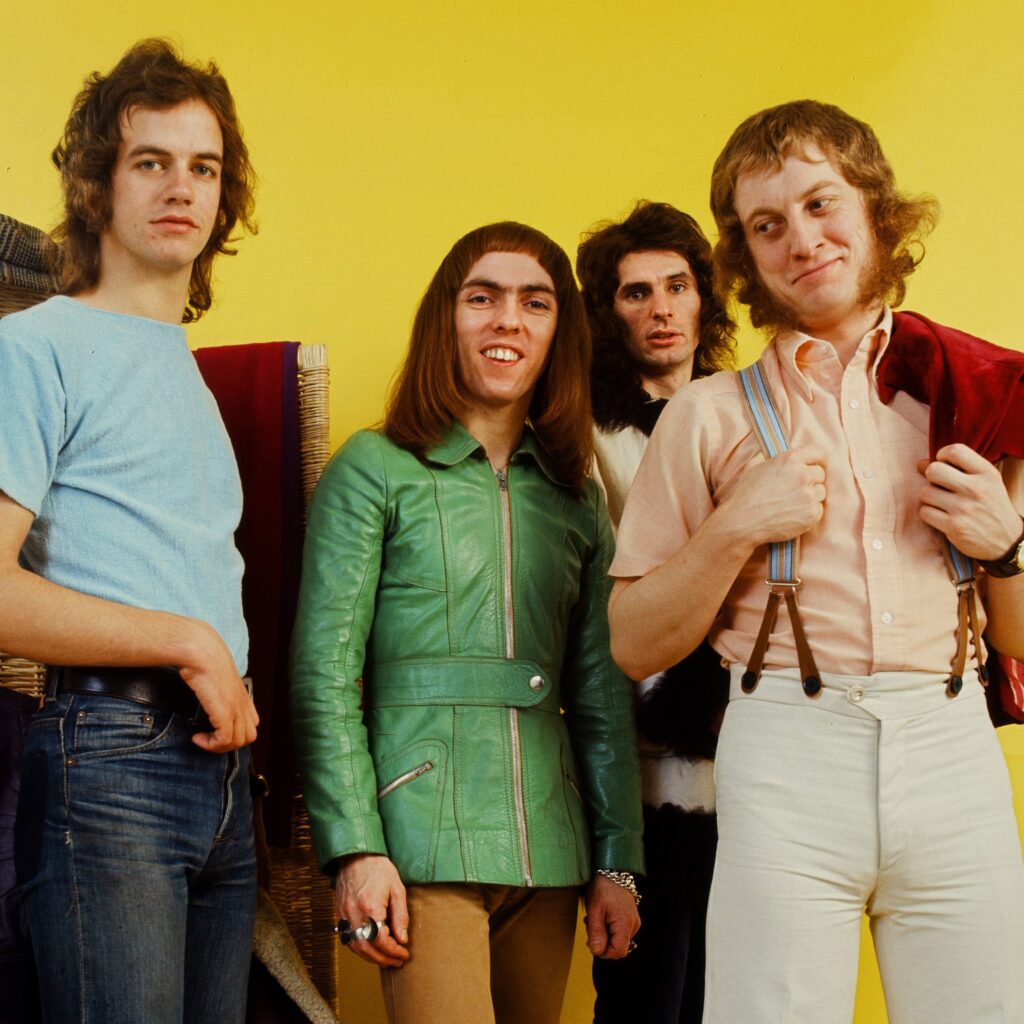
Released in 1979 as a single from Slade’s often-overlooked album Return to Base, “Sign of the Times” arrived during one of the most turbulent periods in the band’s career. Once among the dominant forces of British rock, Slade found themselves navigating a dramatically changed musical landscape at the close of the 1970s. The single failed to make a significant chart impact upon release, a fate shared by much of the band’s output during that transitional era, while Return to Base itself struggled commercially despite earning respect from devoted listeners and critics who recognized the group’s enduring songwriting strength.
Yet history has a way of casting forgotten songs in a more revealing light. Listening to “Sign of the Times” today feels less like revisiting a neglected album track and more like opening a time capsule sealed at the edge of a decade. The song captures a society staring toward the future with equal measures of excitement and apprehension. Written by Noddy Holder and Jim Lea, it reflects the mood of a world rushing into an age of technological acceleration while quietly wondering what might be lost along the way.
The late 1970s were filled with symbols of human achievement. Supersonic flight, moon landings, advances in medicine, and the rise of computing had transformed what once seemed impossible into everyday reality. “Sign of the Times” gathers these milestones into its lyrical landscape, not as a celebration alone, but as an examination of their deeper implications. The song asks a question that remains remarkably relevant decades later: does progress automatically bring wisdom?
Musically, the track reveals a different side of Slade than the raucous, crowd-commanding glam-rock giants who filled arenas earlier in the decade. There is a reflective quality woven through its acoustic-rock foundation, a sense of mature contemplation replacing youthful swagger. The band sounds less interested in delivering an anthem than in documenting a moment of cultural transition. Even the title carries a prophetic weight, suggesting that every era leaves clues about the future hidden within its present anxieties.
What gives “Sign of the Times” its lasting resonance is its perspective. Rather than focusing on personal heartbreak or rebellion, it widens its gaze to encompass civilization itself. References to scientific breakthroughs, social change, and even the specter of surveillance evoke a world becoming increasingly interconnected and increasingly uncertain. The song stands at the threshold between the industrial twentieth century and the digital age that would soon emerge, observing both with a mixture of wonder and caution.
For longtime admirers of Slade, the track represents more than a fascinating historical snapshot. It embodies the resilience of a band willing to evolve when commercial fortunes had faded. Beneath its observations about technology and modern life lies something profoundly human: the eternal struggle to understand where we are headed and whether progress can ever truly answer our deepest questions. In that sense, “Sign of the Times” remains exactly what its title promises—a reflection of its age, and a mirror for ours.