
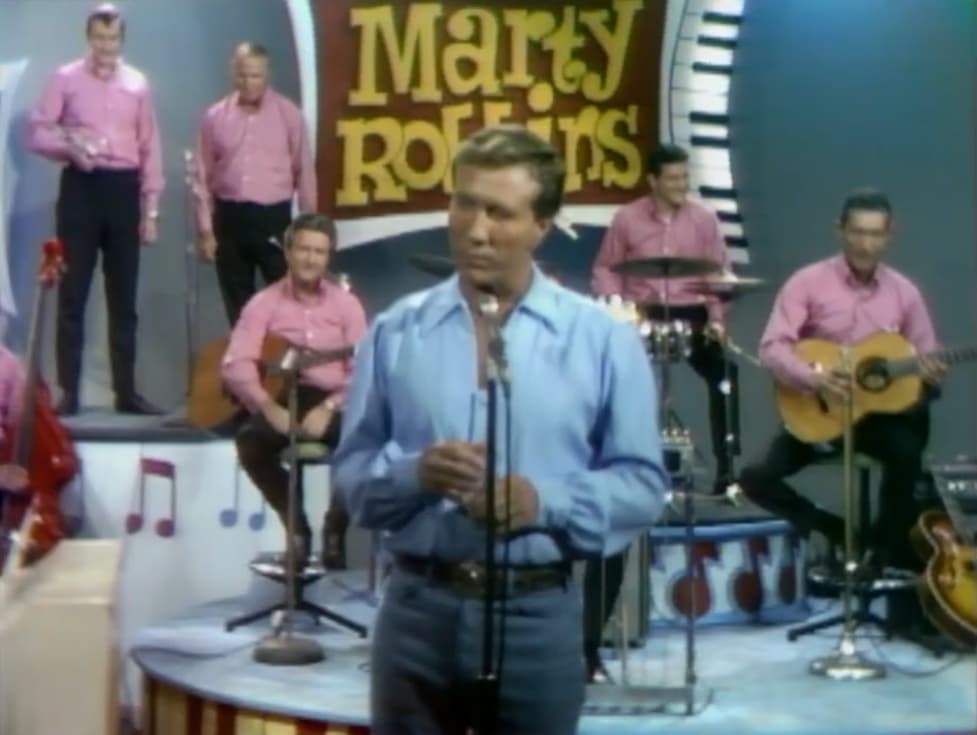
Even when the spotlight shines brightest, the deepest songs are often about the loneliness that lingers after the applause fades.
Among the many recordings and televised performances associated with Marty Robbins, few titles evoke the tension between public spectacle and private feeling quite like “The Show.” Emerging from the world of an artist whose career stretched across country, western, pop, and narrative balladry, the piece reflects many of the qualities that made Robbins one of country music’s most enduring storytellers. Best known for landmark recordings such as “El Paso” and the album “Gunfighter Ballads and Trail Songs,” Robbins possessed a rare ability to transform familiar emotions into cinematic experiences, and that gift echoes throughout “The Show.”
What makes the song compelling is not merely its surface narrative, but the emotional contradiction at its heart. Like so many great country compositions, it explores the distance between appearance and reality. The performer stands before an audience expected to entertain, to smile, to continue the ritual of music and performance, even as personal heartbreak threatens to overwhelm him. It is a theme deeply rooted in country music tradition: the stage becomes both sanctuary and prison, a place where sorrow must be transformed into art before strangers.
Listening closely, one hears a meditation on endurance. The title itself suggests movement, continuity, and obligation. A show cannot stop because a heart is broken; the curtain rises regardless of personal tragedy. Robbins understood this paradox better than most. Throughout his career, he excelled at portraying characters caught between duty and desire, whether they were gunfighters, drifters, lovers, or dreamers. Here, the conflict is internal rather than dramatic. The battle is not fought with pistols on a dusty street but within the soul of a performer struggling to separate memory from responsibility.
Musically, the song draws strength from restraint. Robbins never relied solely on vocal power; instead, he used phrasing, timing, and emotional nuance to communicate vulnerability. His voice often carried a remarkable combination of confidence and fragility, allowing listeners to feel the weight behind every line. That quality gives “The Show” its lasting resonance. The song is not simply about entertainment—it is about the human cost of carrying on when life refuses to cooperate with the role one is expected to play.
Decades after its release, the song remains a reminder of one of country music’s oldest truths: the brightest spotlight can never fully conceal a wounded heart. In the hands of Marty Robbins, that truth becomes something larger than a performance. It becomes a reflection on perseverance, dignity, and the quiet courage required to step back onto the stage when every instinct says to walk away.