
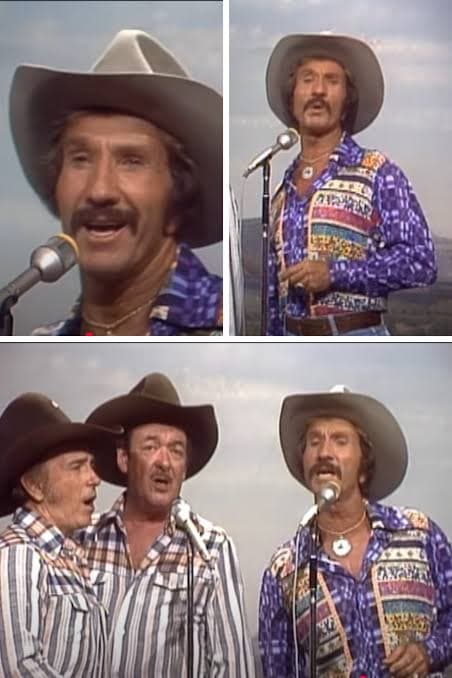
Three Songs, One Destiny: The Endless Ride Toward El Paso
Few musical narratives in American popular music possess the mythic sweep of Marty Robbins’ El Paso Trilogy, a three-part saga that began with the chart-topping “El Paso”, continued with “Feleena (From El Paso),” and reached its poignant conclusion in “El Paso City.” The original “El Paso”, released on the landmark album Gunfighter Ballads and Trail Songs, became one of the defining recordings of the country genre, spending seven weeks atop the Billboard Hot Country chart and even crossing over to reach No. 1 on the Billboard Hot 100 in 1960. More than a hit single, it was the opening chapter of an epic—a cinematic Western rendered not on celluloid but through melody, memory, and the haunting cadence of Robbins’ voice.
At the heart of the trilogy lies an enduring fascination with fate and the irresistible pull of place. “El Paso” tells the story of a cowboy whose love for the Mexican dancer Feleena drives him to jealousy, violence, exile, and finally a fatal ride back into the arms of the woman he cannot forget. It is a ballad built on ancient themes: love that borders on obsession, the consequences of pride, and the romantic notion that some destinies are worth dying for. Robbins transformed these familiar motifs into something deeply personal and uniquely American, crafting a narrative that felt as though it had been lifted from an old dime novel and set to the rhythm of galloping horses.
The success of the original song inspired Robbins to return to its world. With “Feleena (From El Paso),” he shifted perspective and expanded the mythology, tracing the life of the woman who had previously existed only as an object of longing. In doing so, Robbins deepened the emotional landscape of the story, revealing that every legend contains unseen sorrows and untold histories. The trilogy ceased to be merely a tale of one doomed gunfighter and became instead a meditation on intertwined destinies.
By the time Robbins released “El Paso City” in 1976, the narrative had evolved into something even more intriguing. The song introduces a modern narrator who feels mysteriously connected to the cowboy from “El Paso,” as though memory itself transcends time. Themes of reincarnation, déjà vu, and inherited longing emerge, transforming the trilogy into a reflection on how stories endure and how certain places seem to hold the echoes of lives once lived. The city of El Paso becomes more than a setting; it becomes a spiritual landscape where love and loss are eternally replayed.
Taken together, the El Paso Trilogy stands as one of country music’s most ambitious storytelling achievements. It is a reminder that songs can function like great novels, carrying listeners across decades and through generations of memory. In the hands of Marty Robbins, the Western ballad became something timeless: a meditation on passion, mortality, and the strange persistence of the human heart, forever riding toward the distant lights of El Paso.