
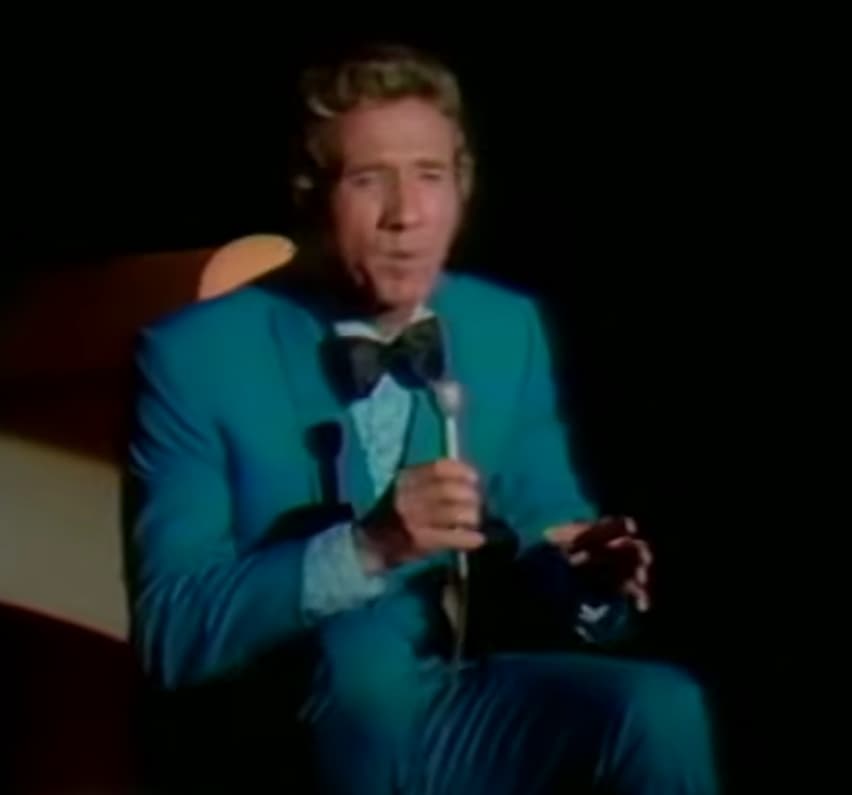
A timeless vow of devotion, “My Woman, My Woman, My Wife” reminds us that love’s greatest triumph is found not in grand gestures, but in steadfast sacrifice.
Among the defining recordings in the remarkable career of Marty Robbins, “My Woman, My Woman, My Wife” emerged as one of the most celebrated country songs of its era. Released in late 1969 and later included on the 1970 album My Woman, My Woman, My Wife, the song became a major commercial success, reaching No. 1 on the Billboard Hot Country Singles chart while also crossing over to the Billboard Hot 100. Its enduring impact was further affirmed when it earned Marty Robbins the Grammy Award for Best Country Song, cementing its place among the finest examples of classic Nashville storytelling. Though often revisited in concert performances—including memorable live renditions that reveal Robbins’ effortless vocal control and heartfelt delivery—it is the emotional honesty of the composition that has allowed it to transcend the era in which it was written.
Unlike many country ballads that revolve around heartbreak or romantic collapse, “My Woman, My Woman, My Wife” is remarkable because it celebrates a love that has endured life’s relentless trials. It is not a song of youthful infatuation but of mature gratitude, written from the perspective of a man reflecting on the quiet heroism of the woman who stood beside him through hardship. The narrator does not attempt to portray himself as flawless; instead, he openly acknowledges his shortcomings, confessing that his wife carried burdens he could neither ease nor fully repay. This humility gives the song an uncommon emotional depth, transforming what might have been a simple love song into a moving confession of admiration and indebtedness.
The lyrical climax arrives not in earthly reward but in spiritual hope. The narrator’s prayer—that heaven might grant his faithful wife the peace she never truly experienced during her lifetime—elevates the song beyond romance into something profoundly human. It speaks to sacrifice without expectation, devotion without applause, and love measured not by words but by years of unwavering commitment. Such themes resonate across generations because they reflect experiences familiar to countless families whose greatest acts of love unfold quietly behind closed doors.
Musically, the recording exemplifies the refined craftsmanship that characterized the Nashville Sound while preserving the sincerity that defined Marty Robbins as both singer and storyteller. Gentle acoustic guitar, restrained orchestral accompaniment, and subtle pedal steel create an atmosphere of dignity rather than sentimentality. Robbins never overstates the emotion. His smooth baritone, celebrated for its remarkable clarity and control, allows every lyric to breathe naturally, giving the impression that he is speaking directly to the listener rather than performing for an audience. In live performances, this quality becomes even more striking. Without relying on elaborate production, Robbins demonstrates the confidence of an artist who understood that a well-written song requires little embellishment. Each pause, each carefully sustained note, reinforces the emotional gravity of the narrative.
Within Marty Robbins’ extensive catalogue—one that ranges from Western ballads and outlaw tales to polished country-pop—“My Woman, My Woman, My Wife” occupies a uniquely intimate space. It lacks the cinematic sweep of his cowboy epics, yet its emotional landscape is every bit as expansive. Rather than painting pictures of distant frontiers, Robbins turns inward, exploring the quiet geography of marriage, loyalty, and gratitude. That inward focus may well explain why the song has remained so deeply cherished for decades. Listeners do not simply hear a husband praising his wife; they recognize the universal longing to adequately thank those whose sacrifices often go unnoticed until time has already passed.
The live performances of “My Woman, My Woman, My Wife” add another dimension to its legacy. Freed from the precision of the studio, Robbins delivers the song with an intimacy that feels almost conversational, allowing the audience to share in the vulnerability at the heart of the lyric. There is no theatrical flourish, only the conviction of an artist who understood that authenticity is the most enduring form of expression. More than half a century after its release, the song continues to stand as one of country music’s most eloquent tributes to enduring partnership—a reminder that the greatest love stories are often written not through extraordinary moments, but through ordinary years lived faithfully together.