
The Final Applause Is Never the End When a Voice Becomes a Memory
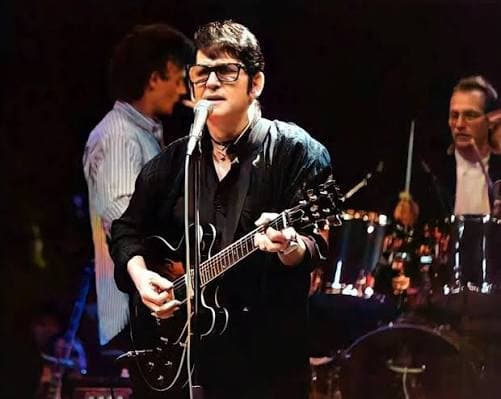
There are performances that succeed because they are technically flawless, and then there are performances that become immortal because history unknowingly stands in the audience. Roy Orbison’s “Last Concert” is remembered for the latter. Recorded during his final public performance in Highland Heights, Ohio, on December 4, 1988—just two days before his sudden passing—it was not released as a contemporary charting single, nor was it part of one of Roy Orbison’s original studio albums. Instead, it later emerged as the live album The Last Concert, preserving the final chapter of an extraordinary career whose renaissance had only just begun. Unlike many of Orbison’s classic recordings that climbed international charts, this performance occupies a different place in music history: not through commercial success, but through its profound emotional significance.
What makes “Last Concert” so remarkable is that it never sounds like a farewell. There is no trace of theatrical finality, no deliberate attempt to summarize a lifetime of achievement. Orbison walks onto the stage with the quiet dignity that had always defined him. His voice—still astonishingly controlled, effortlessly soaring into its signature operatic peaks—carries the same emotional authority that had transformed songs like “Only the Lonely,” “Crying,” and “Oh, Pretty Woman” into timeless classics. Listening today, one is struck not by decline but by remarkable vitality. The performance feels less like the closing page of a career than the opening sentence of an exciting new chapter.
That illusion of tomorrow is precisely what gives the concert its heartbreaking power. Only weeks earlier, Roy Orbison had reunited with a new generation through the Traveling Wilburys and had completed work on Mystery Girl, an album that would become one of the greatest posthumous comebacks in popular music. Nothing within this concert hints that fate had already written its conclusion. Every note reaches toward the future rather than dwelling on the past, making the knowledge of what followed almost unbearable for listeners who return to it decades later.
Musically, the concert demonstrates why Orbison has always resisted easy categorization. His songs inhabit the space between rock and roll, country, pop, and operatic balladry, creating emotional landscapes few singers have ever matched. His extraordinary dynamic control allows vulnerability and grandeur to coexist within a single phrase. He rarely relied on vocal excess; instead, he understood that restraint often magnifies heartbreak. Every crescendo feels earned because it rises from quiet confession rather than dramatic display.
There is also something profoundly human about witnessing an artist performing without the burden of legacy. Orbison was not trying to create a monument to himself that evening. He was simply doing what he had done for decades: singing for an audience with sincerity, discipline, and unwavering professionalism. That authenticity transforms the recording into something greater than a live album. It becomes a document of artistic integrity—a reminder that greatness is often found in consistency rather than spectacle.
Perhaps the deepest legacy of “Last Concert” lies in its refusal to become sentimental. The audience applauds, the songs unfold naturally, and life appears wonderfully ordinary. Only history transforms those ordinary moments into something sacred. We do not hear a man saying goodbye; we hear an artist completely immersed in the work he loved until the very end. In that sense, Roy Orbison’s final concert transcends biography. It reminds us that truly timeless musicians never leave the stage all at once. Long after the lights fade and the applause disappears, the voice continues to echo—quietly, faithfully, and with all the emotional truth that made it unforgettable.