
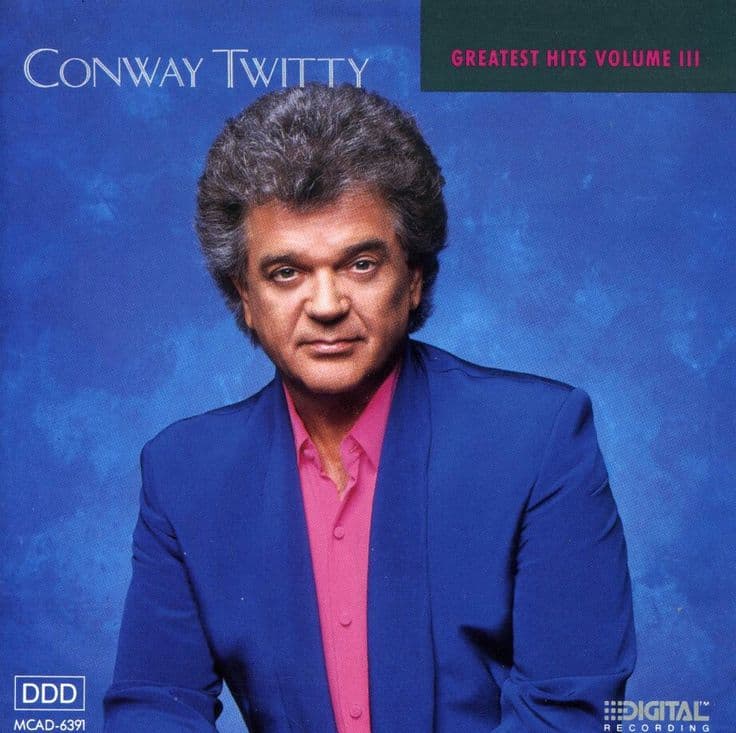
A confession of heartbreak where pride collapses and longing refuses to let go.
In Conway Twitty’s reading of Crazy Arms, the song arrives already crowned by history. First made immortal as a 1956 country number one by Ray Price, the composition carried one of the most dominant chart runs of its era, and when Twitty recorded it for the album Sings the Great Country Hits, he was not chasing a chart revival so much as stepping into a lineage. This was Twitty, newly committed to country after his rock and roll years, paying respect to a standard whose commercial triumph was already secure and whose emotional authority needed no proof.
What makes Crazy Arms endure is not novelty but recognition. The song is built on a simple, devastating premise. The narrator is not angry, not defiant, not even surprised. He is defeated. The arms that once belonged to him now hold someone else, and the knowledge of that fact has stripped him of every illusion of control. In country music, there are many songs about betrayal, but few approach it with such quiet resignation. The genius lies in how plainly the wound is stated. There is no dramatic accusation, only the aching awareness that love has moved on while the heart has not.
Twitty’s interpretation brings a different weight to the song than its original honky tonk incarnation. Where Ray Price’s version swings with the confidence of a genre defining performance, Twitty leans into vulnerability. His voice, already famous for its warmth and conversational intimacy, treats each line like a private admission. He does not perform the pain. He confesses it. This subtle shift transforms Crazy Arms from a dance hall lament into something more introspective, almost lonely, as if the singer is alone with the truth long after the music has stopped.
Musically, the song’s structure reinforces its emotional trap. The melody circles back on itself, never fully resolving, mirroring the narrator’s inability to escape his thoughts. Each verse feels like another attempt to accept reality, and each chorus confirms that acceptance is still out of reach. Twitty understands this tension instinctively. He allows space between phrases, letting silence do some of the storytelling, a technique that would become central to his greatest recordings.
Within Sings the Great Country Hits, Crazy Arms functions as more than a cover. It is a statement of belonging. By choosing this song, Twitty aligned himself with country music’s emotional core rather than its trends. He was not rewriting the past. He was honoring it, while filtering it through a voice shaped by pop success and personal reinvention. That combination gave the song a new texture without disturbing its soul.
Decades later, Crazy Arms remains a benchmark for how country music speaks about loss. In Conway Twitty’s hands, it is less about the moment heartbreak happens and more about the long night afterward, when memory lingers, pride dissolves, and love refuses to loosen its grip. That quiet honesty is why the song still listens like truth pressed into vinyl.