
THE PAIN YOU NEVER SAW COMING IS THE PAIN THAT LASTS THE LONGEST
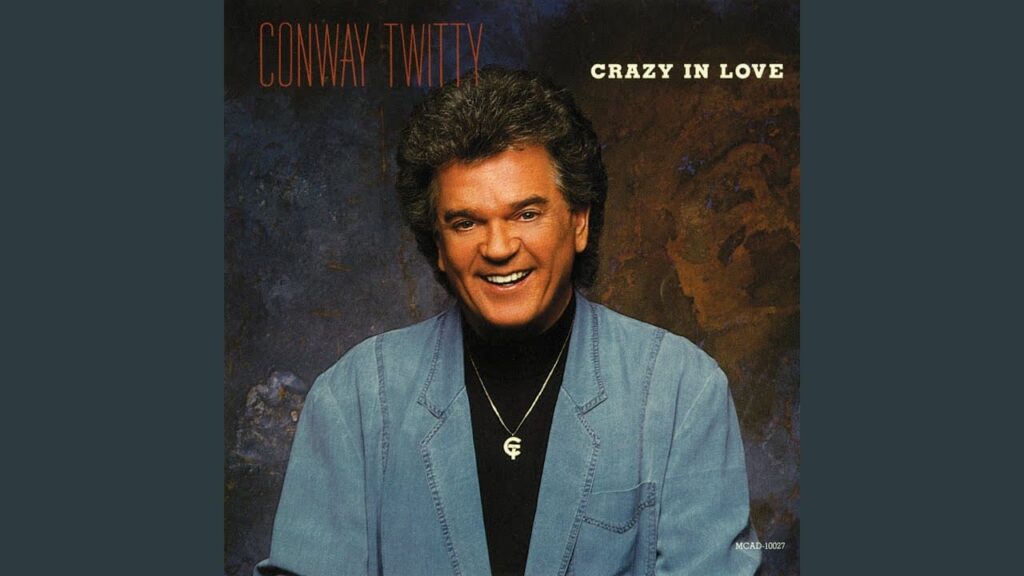
I Couldn’t See You Leavin’ stands as one of Conway Twitty’s most quietly devastating heartbreak ballads, a song that reached No. 3 on the Billboard Hot Country Singles & Tracks chart in 1991 and marked his final Top 10 country hit during a career that had spanned decades and defined an era of American music. Originally issued in December 1990 as the second single from his album Crazy in Love, the track arrived at a point when Twitty’s voice had grown richer with experience and his interpretive instincts sharper with age.
By the time Crazy in Love was released in early 1990, Twitty was a towering figure in country music history. Having scored hit after hit from the 1960s onward, he was in the later chapters of an extraordinary career when I Couldn’t See You Leavin’ was conceived. The album itself was his fifty-fifth studio record, and though it offered up spirited material including the title track, it was this song that crystallized the severity of emotional loss in its most intimate form. In the wider arc of his discography, this moment represents not just another chart entry but an emblem of Twitty’s lifelong affinity for giving voice to the tensions between longing and resignation in matters of the heart.
At its core, I Couldn’t See You Leavin’ is a study in retrospection and blind sorrow. Written by Rory Bourke and Ronny Scaife, the lyrics unfold like a confession from someone caught utterly unprepared by the end of a relationship. The narrator’s realization arrives not with dramatic confrontation but with the stark poetry of absence: a note on a pillow, an empty bed, silence where once there was presence. Twitty’s vocal delivery here is essential to the song’s impact. His voice carries the weight of a life lived in devotion to narrative nuance, the wear of experience lending each syllable a resonance that transforms simple regret into a universal elegy for what was lost too late.
Musically, the arrangement is spare yet expressive, placing Twitty’s baritone front and center over gentle, melancholic instrumentation. The production never seeks to overwhelm but instead creates a sonic space where the words can breathe and echo long after they’re heard. This restraint allows the emotional architecture of the song to unfurl organically, drawing listeners into a place of shared memory and recognition. It is in this space that the song’s real legacy lies: not merely as a charting single from a veteran artist but as a testament to country music’s capacity to articulate the quiet devastation of unseen departures and unspoken goodbyes.
Over three decades on, I Couldn’t See You Leavin’ remains a poignant chapter in Conway Twitty’s vast catalog. It is a reminder that the hardest moments in love are not always those marked by spectacle but those defined by what is left behind in the hush after someone has gone.