
An elegy to a fading way of life.
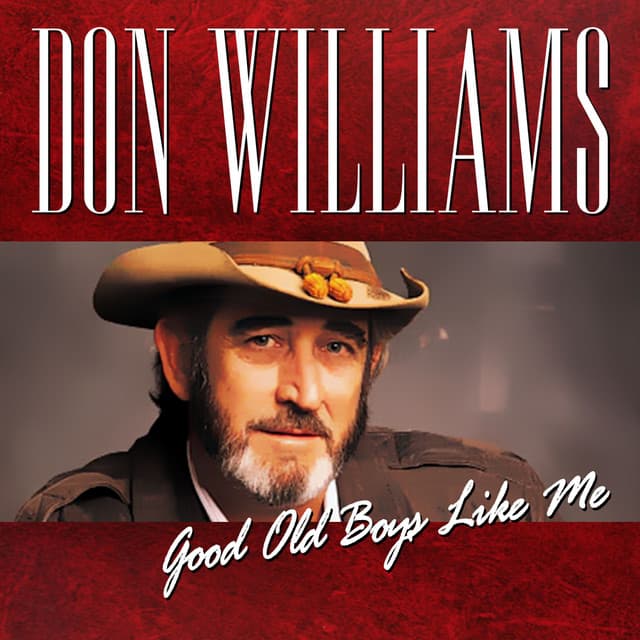
The world was a different place when Don Williams released his 1980 album, I Believe in You. It was a time of transition, a quiet turning point for a nation that was beginning to feel the first tremors of a new, faster-paced era. Amidst this change, a song emerged that spoke to a deeper, more enduring truth. That song was “Good Ole Boys Like Me,” a poignant and deeply personal narrative that resonated with millions and has since become one of country music’s most enduring classics.
The single, released in early 1980, climbed the charts with a quiet determination that mirrored its lyrical content. It peaked at an impressive Number 2 on the Billboard Hot Country Singles chart, a testament to its widespread appeal. While it narrowly missed the top spot, its lasting impact far outshines many songs that did. This was more than just a hit; it was a cultural touchstone. The man behind the song, Don Williams, was often called “The Gentle Giant,” a moniker that perfectly described his deep, resonant voice and his unassuming yet powerful presence. He was a man who didn’t sing; he told stories, and “Good Ole Boys Like Me” is perhaps his most moving one.
The song’s story is one of profound reflection and, ultimately, a subtle lament. Written by the legendary songwriter Bob McDill, it’s a lyrical masterpiece that paints a vivid picture of a man rooted in a traditional, rural way of life. The lyrics aren’t about grand gestures or rebellious acts; they’re about the small, foundational things that shape a person’s character. They recall a childhood spent “learnin’ the words to a country song,” playing “in the backyard ’til the sun went down,” and the simple wisdom passed down from a father who “spoke his mind.” The song isn’t just about a “good ole boy”; it’s a portrait of an entire generation shaped by a sense of place and tradition that was slowly, but surely, beginning to fade.
It speaks to the universal feeling of watching the world change around you, and the quiet struggle of trying to hold on to the values that define you. For many listeners, especially those who came of age in the mid-20th century, the song was a mirror. They saw their own lives reflected in its verses—the simple pleasures, the hard-won lessons, and the dawning realization that the world they knew was becoming a memory. The mention of “little towns growin’ bigger, and the bigger towns growin’ small” is not just a clever line; it’s a heartbreaking observation on the rural-to-urban migration and the homogenization of American culture. The song’s beauty lies in its bittersweet honesty. It’s not angry or bitter; it’s just sad and a little bit resigned.
Don Williams’s gentle delivery elevated the song from a simple narrative to a deeply emotional experience. He didn’t belt out the words; he caressed them, each note imbued with a sense of quiet dignity and genuine feeling. His performance is a masterclass in subtlety, allowing the rich, layered lyrics to do the heavy lifting. The song stands as a timeless piece of art because its central theme—the tension between tradition and modernity—is one that will always be relevant. For older readers, it’s more than a song; it’s a memory, a soundtrack to their youth, and a gentle reminder of a time and place that, while perhaps gone forever, will never be forgotten. It’s a song to be listened to late at night, in a quiet room, with a glass of something warm in hand, as you reflect on a life well-lived and the simple lessons that got you there. It’s a song for the heart, a song for the soul, and a song for all the “Good Ole Boys” who, no matter where they are now, will always remember where they came from.