
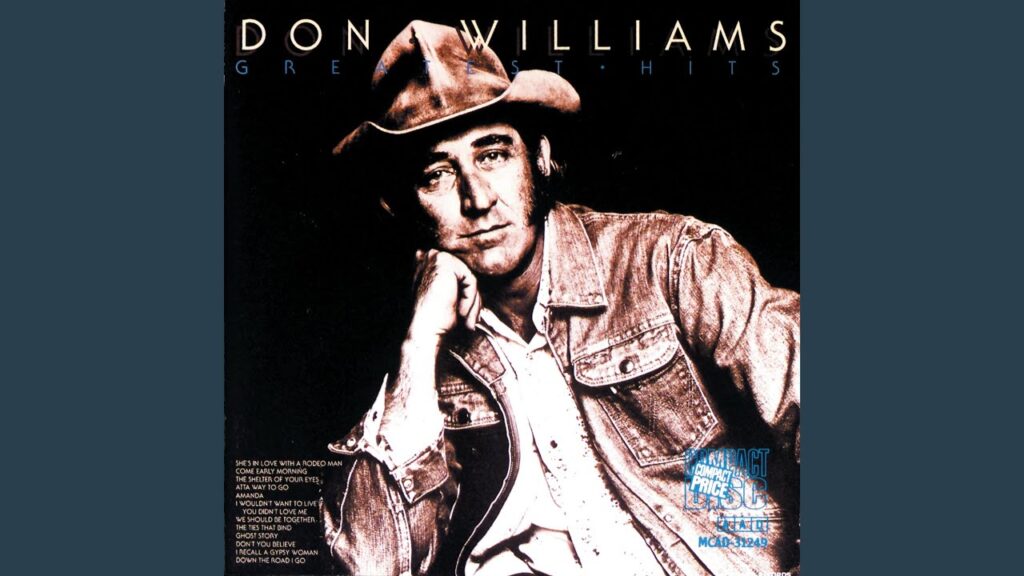
An intimate portrait of fleeting romance and lasting memory.
The airwaves of 1973 were filled with a sound that felt like a quiet conversation between friends, yet possessed the depth of a classic novel. It was the voice of Don Williams, the “Gentle Giant” of country music, delivering a song that would become one of his enduring signatures: “I Recall A Gypsy Woman.” This isn’t a raucous roadhouse anthem; it’s a tender, almost whispered recollection, a piece of musical introspection that perfectly captured the reflective spirit of the early seventies.
Released in July 1973 as a single on the JMI Records label, the song quickly found its way into the hearts of country music lovers, securing a strong presence on the charts. It peaked at Number 4 on the Billboard Hot Country Singles chart in the United States, cementing its status as a major hit in Williams’ burgeoning career. While it wasn’t a crossover smash in the pop market, its success within the country realm was significant, signaling that the genre had an appetite for sophisticated, introspective material that eschewed the more traditional honky-tonk themes. The accompanying album, Don Williams Volume III, further showcased his commitment to a smooth, mellow style that stood distinct from many of his contemporaries.
The genius of “I Recall A Gypsy Woman” lies not only in Williams’ warm, unassuming baritone but also in the rich, evocative songwriting. The song was penned by the celebrated songwriting duo of Bob McDill and Allen Reynolds, who were masters at crafting narratives that felt profoundly personal. The story behind the song is a universal one dressed in romantic mystique: the recollection of a brief, passionate, and ultimately transient love affair with a woman described as a “gypsy.” This figure isn’t a literal nomadic traveler, but a metaphor for a free spirit—a woman who is beautiful, captivating, and impossible to pin down. She is a woman of ‘green eyes’ and a ‘smile that was not easy to forget,’ who enters the narrator’s life like a sudden, brilliant flash, leaving an indelible mark before disappearing just as swiftly.
The meaning of the song resonates deeply with anyone who has experienced a relationship that defies conventional definition or duration. It is an exploration of nostalgia mixed with acceptance. The narrator doesn’t express bitterness or regret; instead, there’s a serene, almost melancholy contentment. He is not longing for her return but cherishing the memory of what was. The “gypsy woman” symbolizes that powerful, untamed element of life—the fleeting moment of perfect freedom and intense connection that can’t be contained by promises or routines. The line, “She was wild, but she belonged to me, for a little while,” is the emotional core, capturing the paradox of temporary ownership and enduring impact. It’s about the understanding that some beautiful things are meant to pass, leaving only the richness of the recollection.
For those of us who came of age during that time, this song is a time capsule. It evokes a simpler era, one where a gentle steel guitar and a straightforward melody could communicate more emotion than any overproduced track today. Listening to “I Recall A Gypsy Woman” now is like pulling out an old photograph—the edges might be faded, but the feeling it conjures is sharp and true. It’s the sound of a late-night drive down a country road, of quiet contemplation, and of the realization that some memories are simply too precious to ever fade away. Don Williams delivered the words with such effortless sincerity that he didn’t just sing a song; he shared a piece of his—and our—emotional history. It’s a reminder that true country music, in its finest form, is poetry set to a simple, unforgettable tune.