
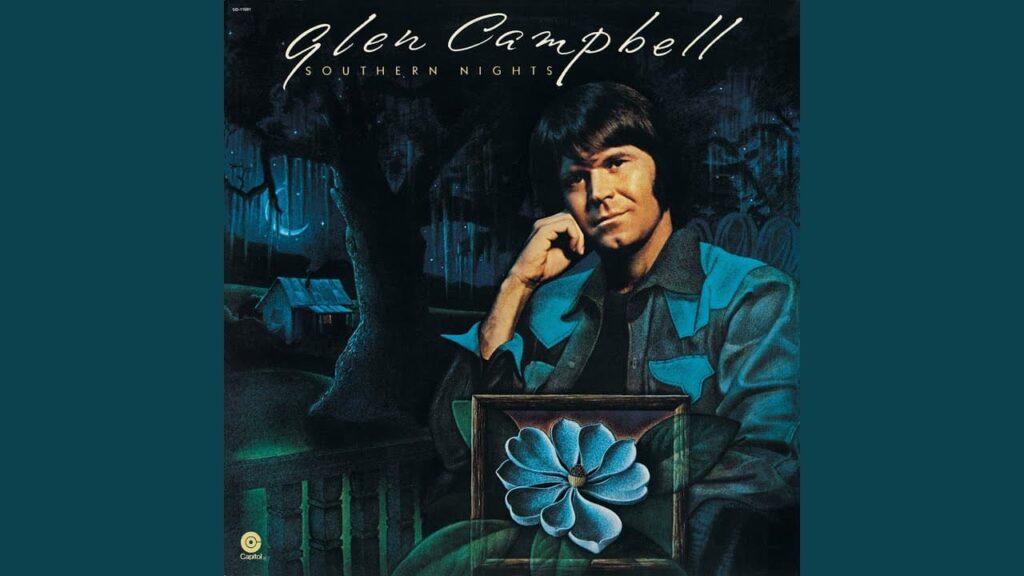
A radiant journey into memory, wonder, and the quiet magic that lives in the heart of the American South
When Glen Campbell released Southern Nights in 1977 as the title track of his album Southern Nights, the song swiftly rose to the top of the Billboard Hot 100, the Country chart, and the Adult Contemporary chart, a rare and commanding sweep that reaffirmed Campbell’s broad appeal across genres. Rooted in the songwriting brilliance of Allen Toussaint, the piece arrived at a moment when Campbell was already a household name, yet it carried a tone so intimate and warm that it felt like a personal letter delivered to millions at once.
At its core, Southern Nights is a meditation on memory and the mystical weight of place, drawn from Toussaint’s recollections of childhood visits to rural Louisiana. Campbell did not simply cover the song. He reinterpreted it through his own sensibilities, infusing it with a bright, effervescent energy shaped by his singular vocal clarity and his unmistakable guitar phrasing. The result was a recording that retained the soul of Toussaint’s vision while radiating Campbell’s signature blend of country warmth and pop accessibility.
The thematic heart of Southern Nights lies in its celebration of the small, often overlooked details that form the emotional architecture of nostalgia. The lyrics linger on sensations more than linear storytelling. Fireflies. Whispering breezes. The soft murmur of voices drifting through open windows on humid evenings. These are the fragments that define a childhood shaped by the rhythms of the South. Rather than offering a precise narrative, the song captures the elusive essence of recollection, the way memories return in flashes that feel both vivid and dreamlike.
Campbell’s performance amplifies this aura. His voice glides through the melody with an almost weightless quality, as if carried on the same warm night air the lyrics describe. The arrangement supports this mood through its gentle groove, shimmering keys, and playful guitar runs that evoke the spontaneity of a mind drifting toward happier times. It creates a soundscape that feels like a porch light turning on at dusk, familiar and comforting.
What gives Southern Nights its enduring resonance is the universality embedded within its regional specificity. It speaks to anyone who has felt the pull of a place remembered, the ache that comes from knowing that time has moved forward even as part of us remains anchored to an earlier world. Campbell understood this instinctively, and his interpretation transforms Toussaint’s personal homage into a shared invitation. It asks the listener to step back for a moment, breathe, and let the soft glow of memory guide them home.