
A GENTLE SLEIGH RIDE THROUGH WINTER NOSTALGIA
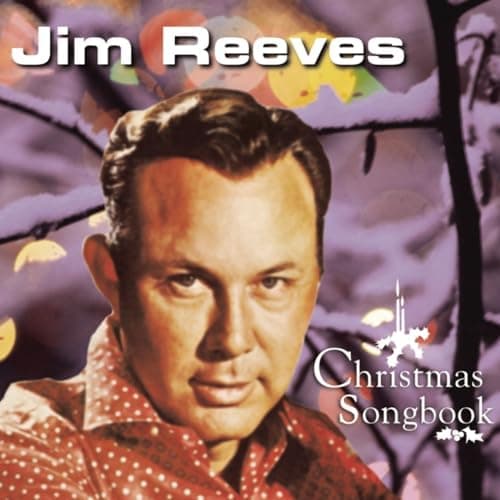
When Jim Reeves lends his smooth, velvety baritone to “Jingle Bells,” it’s not just a holiday standard—it becomes a softly reverent hymn of Christmas joy and reflection. This rendition appears on his only Christmas album, Twelve Songs of Christmas, released by RCA Victor in 1963. Although this festive collection didn’t spawn hit singles in the traditional pop or country charts, the album itself charted, reaching #15 on Billboard’s Christmas Records album chart.
Long before “Jingle Bells” was ever stamped on frosty winter windows or echoed in department store aisles, it was the work of James Pierpont—a jaunty, spirited tune about sleigh rides and laughter. But in the hands of Jim Reeves, its familiar melody is transformed. Reeves recorded it during sessions in October 1962 and July 1963, under the deft production of Chet Atkins, for his holiday album.
Unlike some more bombastic or novelty takes, Reeves’ version is distinguished by its understated grace: the arrangement is spare, his voice warm and unhurried, and the pace gentle, like a soft falling snow. The instrumentation leans toward classic country-pop rather than full-blown Christmas kitsch—strings, gentle guitar, and discreet sleigh bells give support without overwhelming. That balance is part of its quiet power: it never feels like a performance, but rather an invitation.
The significance of this rendition lies less in breaking any records or reinventing a holiday classic, and more in how Reeves makes it his own. He’s not attempting to top the original’s jubilant energy; instead, he reinterprets it as a cozy reminiscence. Where Pierpont’s original version evokes the playful rush of a horse-drawn sleigh, Reeves seems to reflect on Christmas from the warmth of a fireside room, perhaps looking out at a snowy yard, glass in hand.
Lyrically, “Jingle Bells” is deceptively simple—its chorus repeats like a mantra, and its verses narrate everyday winter fun. Reeves’ vocal delivery hints at nostalgia and a kind of gentle contagion: you can almost hear the breath of the cold air, the tapping of the horses’ hooves, and the muffled laughter of friends bundled together. There’s no rush; the song isn’t about speed—it’s about savoring the sound of bells, the rhythm of a sleigh, and the shared joy that Christmas brings.
Beyond its arrangement, Reeves’ “Jingle Bells” speaks to something larger in his career and legacy. He was, by 1963, already a well-established country star known for his smooth, sophisticated sound. But he wasn’t primarily known for holiday music. Twelve Songs of Christmas remains his only full Christmas album. That makes his take on “Jingle Bells” especially poignant—part of a rare, deeply personal holiday effort, rather than a commercial gesture.
In the broader arc of his career, this song stands as a gentle testament: Reeves did not need to shout to be heard. His delicacy, his subtle phrasing, and his unforced sincerity elevate what could have been a novelty track into a timeless moment. For listeners today, his “Jingle Bells” remains a quiet gem in the catalog of Christmas music—a reminder that Christmas magic often lives in hushed tones, reflective glances, and the soft echo of bells in the distance.