
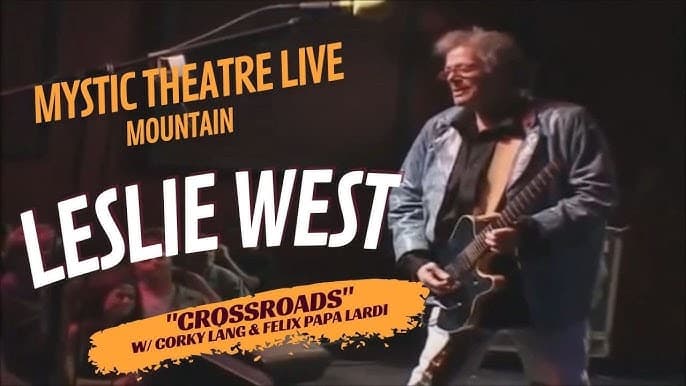
A Cry Echoing Through Roads and Regret
When Leslie West joined forces with Pat Travers to release Crossroads in 2018, it became more than a fleeting single — it was a reverent nod to a long lineage of blues mythology and rock‑guitar transcendence. The recording emerged under the banner of The Voices of Classic Rock, released July 30, 2018.
From the first moment the guitars moan and the rhythm thumps, the listener is pulled into a haunted junction of memory and longing. This version of Crossroads is not a casual cover. It is a torch passed across decades, from the dusty Mississippi Delta to the hard‑driving stages of rock.
The Weight of History Behind the Melody
At the root of this recording lies the profound legacy of Robert Johnson and his 1936 song “Cross Road Blues.” Johnson’s original recording — spare, aching, unadorned — captured a sense of isolation, desperation, and spiritual urgency. Recorded in San Antonio and released in 1937, it became deeply rooted in Delta blues tradition.
Though the later legend cast the song as a Faustian bargaining cry — a musician’s desperate plea to barter his soul at midnight crossroads for guitar mastery — scholars caution that Johnson’s lyrics speak less of occult transactions and more of vulnerability, fear, and the grim reality of being a Black man alone on dark Southern roads.
Over the decades, Crossroads (or Cross Road Blues) transcended generations. Electric‑blues reinterpretations, most famously by Cream and Eric Clapton, reimagined Johnson’s acoustic sorrow into triumphant rock swagger. That transformation turned a regional lament into a universal rock gospel.
Leslie West’s Version: More Than a Cover, a Reclamation
In the hands of Leslie West and Pat Travers, Crossroads becomes a rite of passage — not a simple recreation, but a renewal. West, whose guitar tone was once described as able to “stop a rhino in full charge,” brings his signature swollen, overdriven axe‑sound. His voice, raspy and world‑worn, carries more than a song: it carries legacy.
This version does more than lean on nostalgia. It acknowledges a lineage of sorrow, survival, and redemption. As the slide and distortion blend, the track echoes with all the stories imbued in the crossroads myth — the traveler hitchhiking, the soul in search of deliverance, the haunting silence of highways after sundown. Yet in West’s voice, there is neither fear nor paralyzing dread; there is defiance, affirmation, a refusal to stay lost.
Musically, the arrangement brings the song into the present. The guitars roar. The rhythm section propels. The solo doesn’t simply honor the past — it reshapes it. In that reshaping, the listener hears not only Robert Johnson’s blues but also the hard rock sweat of decades, the smoke of club lights, the roar of crowds, the longing for connection.
Lyrically and metaphorically, West and Travers re‑anchor the song in human experience. The crossroads — once a narrow fork in dusty Delta roads — becomes every crossroads of the heart: regret, longing, choice, redemption. Each note is a step across that junction; each bending string, a sigh recalling years gone by.
Enduring Significance
This 2018 rendition of Crossroads stands as a testament to the adaptability and immortality of blues tradition. It reminds the listener that songs are living things: they draw from history, carry its shadows, but also evolve through each artist who dares to claim them. Leslie West, late in his journey, took up that torch and carried it forward — a gesture of respect, of remembrance, and of reinvention.
For any listener who will cross that threshold with this recording, the journey is as much inward as outward — a confrontation with sorrow and salvation, memory and resilience. The crossroads remains unchanging, but our passage through it reshapes us.