
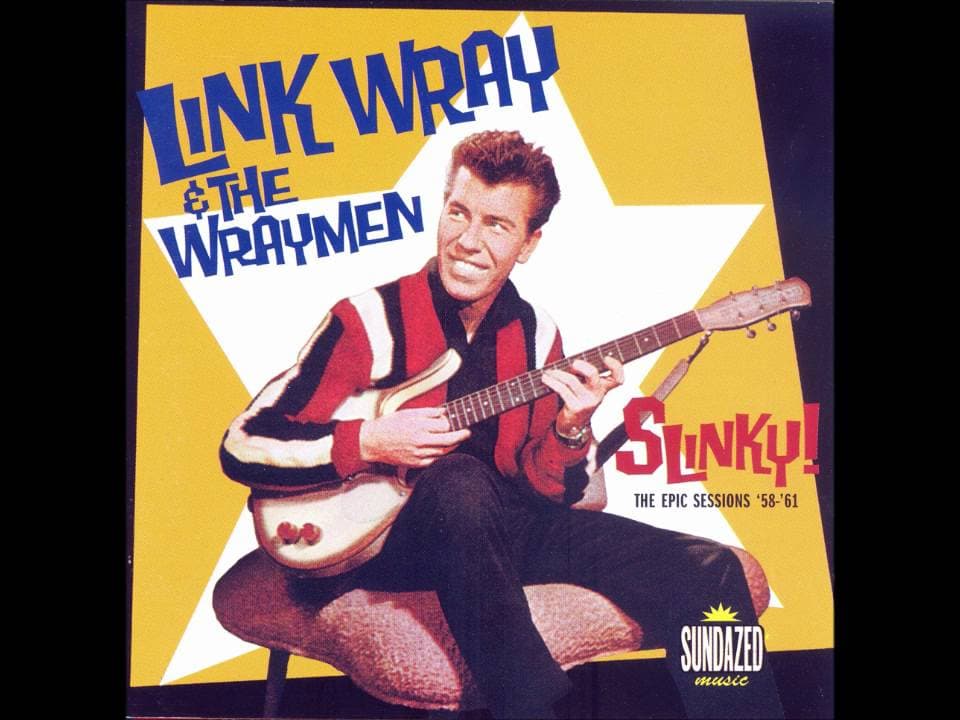
A raw instrumental that taught rock and roll how to sound dangerous without saying a single word.
Released in 1958, Rumble by Link Wray arrived as a two minute provocation that defied every expectation placed on instrumental music. Issued as a standalone single and later appearing on Link Wray & The Wraymen, the track climbed to number 16 on the Billboard Hot 100, an extraordinary achievement for a wordless record built on distortion, menace, and atmosphere rather than melody in the traditional sense. At a time when rock and roll was still being packaged as youthful fun, Rumble cut through the radio with something far darker and far more adult.
What made Rumble so unsettling was not complexity but intent. Link Wray deliberately damaged his amplifier speakers, producing a distorted growl that sounded less like music and more like a warning. The opening drumbeat enters like footsteps in an empty street, while the guitar does not sing so much as loom. Each note feels spaced, deliberate, and heavy with implication. There is no rush to impress. The power comes from restraint, from the silence between phrases, from the sense that something could erupt at any moment.
The title itself, referencing gang violence, gave the song a reputation that preceded it. Some radio stations banned Rumble outright, fearing it might incite trouble among teenagers. That reaction is telling. The record contains no lyrics, no explicit narrative, yet it communicated threat and defiance so clearly that adults heard danger where words were absent. In doing so, Link Wray proved that tone and texture could be as expressive as any lyric, and perhaps even more unsettling.
Musically, Rumble stripped rock and roll down to its bones. The chord progression is minimal, almost primitive, but the weight behind each strike gives it gravity. This was not music meant for dancing in sock hops. It was music that suggested alleyways, leather jackets, and unspoken rules. Later generations of musicians took careful note. Pete Townshend famously credited Rumble with inspiring him to pick up a guitar, while its influence can be heard in the DNA of hard rock, punk, and even heavy metal. Power chords, distortion as emotional language, and attitude as a compositional tool all trace a line back to this record.
Beyond its technical innovations, Rumble endures because it captures a feeling that remains timeless. It is the sound of youthful rebellion before it learned to explain itself. There is no manifesto here, no speech, no chorus demanding allegiance. Instead, the song trusts the listener to understand the mood instinctively. That trust gives the record its longevity.
More than six decades later, Rumble still sounds confrontational. It has not softened with age, nor has it become a nostalgic novelty. It stands as a reminder that rock music did not begin with virtuosity or excess, but with a single guitar daring to sound impolite. In that sense, Link Wray did not just record a hit. He carved a shadow that generations of musicians would gladly step into.