
A heartfelt confession of love beyond wealth
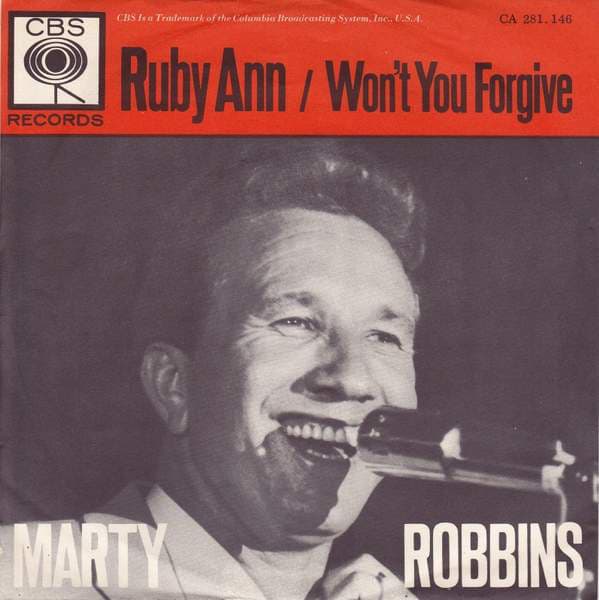
In October 1962, Marty Robbins released Ruby Ann, a single that would soon claim the top spot on the U.S. country chart and affirm Robbins’s capacity to connect across genres. The song reached #1 on the country chart, spent a singular week in that position beginning the issue dated January 5, 1963. Meanwhile “Ruby Ann” crossed over to the pop audience, peaking at #18 on the US Billboard Hot 100, and climbed to #4 on the Easy Listening chart. This track captures Robbins in a transitional moment — riding high on success while showcasing his versatility.
Ruby Ann does not belong to a traditional LP debut of the period. It appeared as a standalone single for the Columbia Records label in late 1962.
In the tapestry of mid‑20th‑century country music, “Ruby Ann” stands out not because it spins a grand western saga or nostalgic ballad, but because it carries a simple, intimate story: the true measure of love lies not in wealth or status but in sincerity and devotion. The lyrics tell of a man watching another, wealthy suitor attempt to woo the titular Ruby Ann. Despite the suitor’s money and fame, Ruby Ann chooses the “poor, poor man.” The singer, addressing the suitor, observes that money does little when love is not genuine: “your money can’t buy if your power can’t hold.”
Musically, the song blends Robbins’s smooth, warm vocal delivery with a gentle up‑tempo arrangement. The melody carries a hint of rockabilly swing, but remains firmly rooted in classic country sensibility. That balance made “Ruby Ann” accessible beyond core country audiences — its crossover into pop and Easy Listening charts testifies to the universal resonance of its theme, presenting love as an emotional currency more potent than riches.
The cultural significance of “Ruby Ann” is subtle but enduring. Among fans and critics of Robbins’s work the song often surfaces in lists of his most memorable recordings, a testament to how it reveals another facet of his artistry beyond the Western ballads and harrowing narratives for which he is best known.
When the record spins on a vintage turntable, what remains is that quiet conviction — that love’s true value is not measured in gold or titles, but in honesty, heart, and the courage to follow one’s feelings. In that sense “Ruby Ann” offers more than a fleeting chart success — it becomes a modest, timeless declaration: real love sees beyond all external trappings.