
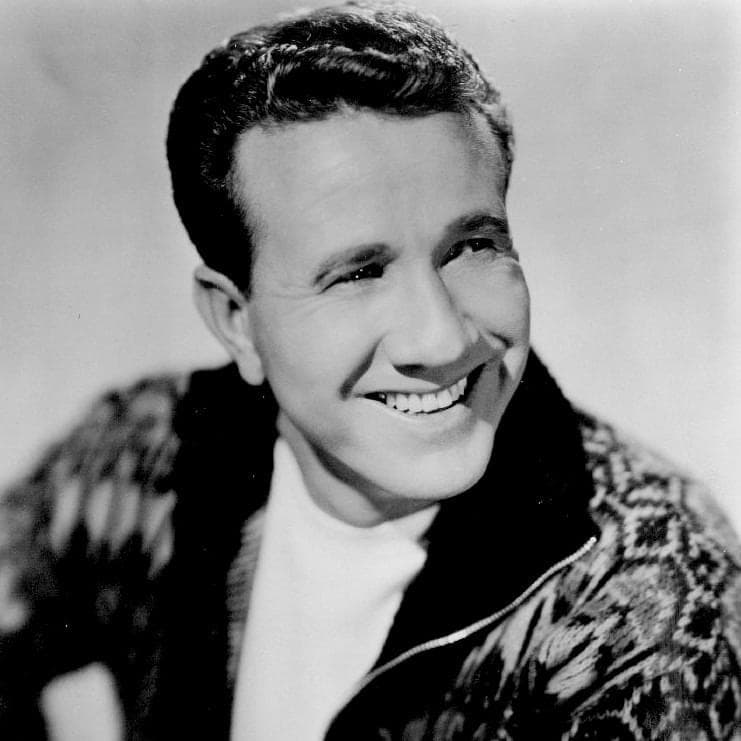
A timeless ballad of jealous, deadly love that drives a lonely cowboy back to his fate in the dusty streets of El Paso.
There are songs that simply pass through the airwaves, and then there are those rare, magnificent creations that carve themselves a permanent niche in the cultural landscape, becoming less a piece of music and more a cinematic short story set to a haunting, unforgettable melody. “El Paso,” the magnum opus from the legendary crossover artist Marty Robbins, is decidedly the latter. Released in the twilight of 1959, this song didn’t just top the charts; it ushered in the new decade with a dramatic flair few could have predicted, securing its legacy as the very first No. 1 hit on the Billboard Hot 100 for the 1960s. Its chart-topping journey was swift and decisive. It was released in October 1959 as a single from the landmark album Gunfighter Ballads and Trail Songs, hitting its peak on the country charts on December 21, 1959, and then ascending to the pinnacle of the Billboard Hot 100 chart two weeks later. This achievement marked Marty Robbins’ only number one pop song, though it was his sixth of sixteen chart-toppers on the country side, underscoring its unique appeal across genres.
To truly understand the power of “El Paso,” you must recognize it for what it is: a breathtakingly detailed, three-minute, forty-eight-second Western film in song form. The narrative, a first-person account by a desperate cowboy, is the heart and soul of the track. The story begins in the dusty, unforgiving West Texas town of El Paso, where our protagonist falls hopelessly in love with Feleena, a beautiful, “wicked” Mexican dancer at “Rosa’s Cantina.” This wasn’t a story simply pulled from thin air; Robbins was a man deeply influenced by the romance and tragedy of the Old West, a passion he inherited from his grandfather, a first-rate storyteller known as “Texas” Bob Heckle. It’s easy to picture the young Marty sitting captivated, his imagination seeding the very tales that would later define his career.
The song’s meaning is a profound exploration of unrequited and possessive love, fate, and redemption—or perhaps, a fatal lack thereof. Driven mad by jealousy upon seeing another cowboy flirting with Feleena, the narrator challenges his rival to a duel and kills him. The inevitable flight from justice follows, a desperate gallop into the badlands of New Mexico, a lonely refuge from the posse’s pursuit. But here is where the narrative’s true depth shines. The love for Feleena proves to be “stronger than my fear of death.” Despite knowing the consequence, the pull of the cantina—and the woman who dances there—is an irresistible force, a tragic, predetermined destiny. He returns to El Paso, only to be chased, fatally wounded, and die in Feleena’s arms after one final, precious kiss. The genius is in Robbins’ execution, particularly the sudden and masterful shift from the past to the present tense as the narrator, in his hideout, expresses his overwhelming yearning. This technique drags the listener from a recollection into the immediate, heart-pounding urgency of the cowboy’s final, desperate ride.
The production elements are as crucial to its reflective, nostalgic feel as the lyrics. Grady Martin’s legendary Spanish guitar intro and accompaniment, along with the haunting harmonies provided by Bobby Sykes and Jim Glaser, lend the song a dramatic, mournful quality—a sound that perfectly embodies the sun-baked, tragic landscape of the narrative. It’s a sound that evokes the memory of sitting by an old radio, completely lost in the drama unfolding in a faraway time and place. This wasn’t just a hit song; it was the birth of the definitive story-song in the country/western genre, earning Robbins a Grammy Award for Best Country & Western Recording in 1961. The legacy of “El Paso” is so enduring that Robbins would write explicit sequels, including “Feleena (From El Paso)” in 1966 and “El Paso City” in 1976, cementing the story as a Western trilogy that remains one of the most celebrated and analyzed narratives in music history. It stands today as a glorious, melancholy monument to a time when a four-minute song could tell a story more gripping and emotionally resonant than many a feature film.