
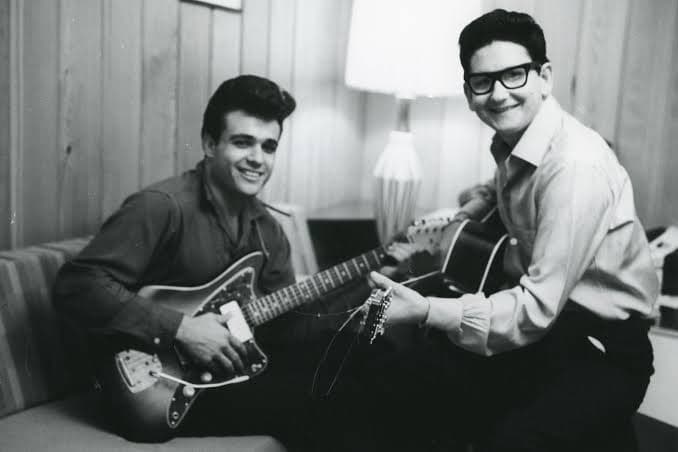
A voice so wounded and so proud that it turns heartbreak into something almost sacred
In 1962, Roy Orbison released “Crying”, written with his closest creative partner Joe Melson, and the song quickly revealed its quiet power to the world. It climbed to No. 2 on the Billboard Hot 100 in the United States and reached No. 1 on the UK Singles Chart, confirming that Orbison’s singular emotional language could cross any border. The song anchored his 1962 album Crying, a record that captured him at a creative peak, when vulnerability and technical mastery met without compromise. Known in Spanish speaking territories as “Llorando”, the song would go on to live multiple lives, each one carrying the same ache at its core.
What makes “Crying” endure is not a dramatic plot or a clever turn of phrase, but the way it stages emotional restraint and then destroys it from the inside. The song begins almost conversationally. Orbison sounds calm, even polite, as he encounters a former lover and insists he is fine. The melody sits low, the arrangement sparse. This is the sound of a man performing composure, trying to convince himself as much as anyone else. The genius lies in how long Orbison lets this illusion stand.
As the song unfolds, the emotional architecture becomes clear. Each verse inches higher, each line adding pressure. By the time the chorus arrives, the truth can no longer be contained. When Orbison sings that he was crying, the word itself stretches into something operatic, not for show, but because the feeling demands that scale. His voice does not crack. It soars. That distinction matters. Roy Orbison never portrays weakness as collapse. Instead, he frames it as endurance.
Musically, “Crying” is built around contrast. The orchestration swells and recedes with careful control, mirroring the internal battle between dignity and despair. Joe Melson’s co writing plays a crucial role here, shaping lyrics that are plainspoken yet devastating. There is no bitterness, no accusation. The pain is internalized, which makes it heavier. The narrator does not blame love for hurting him. He accepts it as the price of having felt something real.
The song’s cultural legacy rests on this emotional honesty. “Crying” helped redefine what a male pop vocal could express in the early 1960s. At a time when stoicism was often mistaken for strength, Orbison offered a different model. He stood still, hid behind dark glasses, and sang about devastation with absolute clarity. Decades later, whether heard in English or as “Llorando”, the song still resonates because it speaks to a universal moment. The moment when pride dissolves, and feeling finally tells the truth.
For listeners who return to “Crying” again and again, it never sounds dated. It sounds eternal. Not because heartbreak is timeless, but because Roy Orbison found a way to give it dignity.