
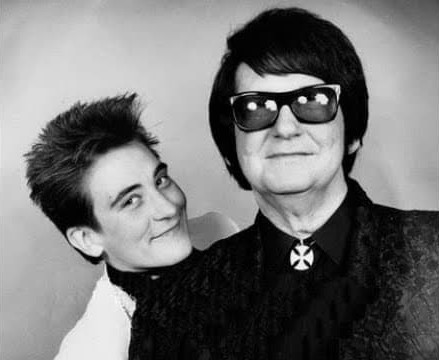
Shared confession of heartbreak where two generations meet in the same open wound
When Roy Orbison joined voices with k.d. lang on Crying, the result was not a novelty duet but a moment of rare emotional alignment that briefly returned Orbison to the singles charts in 1987. Released as a single in connection with the documentary Hail! Hail! Rock ‘n’ Roll, the recording introduced Orbison’s classic lament to a new era while affirming its enduring power. Though Crying was first immortalized decades earlier, this version carried its own commercial and cultural weight, charting in several territories and reminding listeners that true heartbreak does not age. It was a late career moment of visibility for Orbison and a defining early statement for lang, who was still emerging into international consciousness.
The original Crying had already secured its place in the canon as one of Orbison’s most devastating compositions. Written with Joe Melson, it stripped romantic collapse down to its barest truth. Pride fails. Tears come anyway. What makes the Orbison and lang rendition extraordinary is not reinvention but restraint. The arrangement remains sparse, almost reverent, allowing the song’s architecture to breathe. This is crucial, because Crying is not built on clever metaphors or narrative twists. It survives on emotional inevitability. Every note ascends toward a breaking point that feels less like performance and more like surrender.
Orbison’s voice, by this stage of his life, carried history within it. The operatic lift that once sounded invincible now sounded hard won. When he sings of seeing a former lover and pretending strength, there is an added dimension of lived experience. Loss had marked his life in ways few pop singers ever endure, and although the lyrics do not reference biography, the resonance is unmistakable. His phrasing is careful, almost conversational, until the chorus demands that he climb into that familiar upper register. When he does, it feels less like a vocal showcase and more like an emotional reflex.
k.d. lang enters not as a counterpart but as a mirror. Her voice does not compete with Orbison’s. It shadows him, then gradually steps into the foreground. Lang had long cited Orbison as an influence, and that reverence is audible in her discipline. She understands that Crying requires stillness. Her tone is controlled, almost choral, yet charged with longing. When the two voices finally intertwine, the effect is quietly overwhelming. It sounds like shared memory rather than duet harmony.
The enduring power of this version lies in its refusal to modernize pain. There are no ironic edges, no stylistic updates meant to signal relevance. Instead, the performance asserts that emotional honesty is timeless. Crying endures because it articulates a universal moment of human failure, the instant when dignity collapses and truth takes over. In this recording, Roy Orbison and k.d. lang do not reinterpret that moment. They inhabit it together, and in doing so, they preserve it for another generation of listeners who recognize themselves in its ache.