
A defiant vision of tomorrow where rebellion becomes prophecy and sound itself feels like revolution
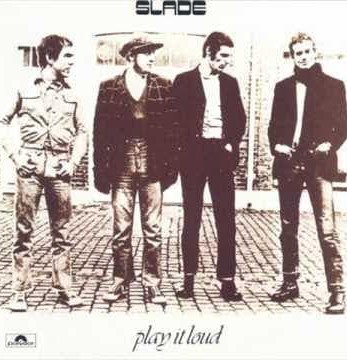
Before the thunderous stomp of their glam-era dominance fully took hold, Slade stood at a crossroads, channeling raw energy into reinterpretation rather than reinvention. Their rendition of The Shape of Things to Come, drawn from the album Play It Loud, reflects this formative moment with striking clarity. Originally associated with the late-1960s countercultural wave, the song found renewed life in Slade’s hands, though it did not register as a major chart force for the band. Its significance lies elsewhere, in the way it captures a group sharpening its identity while still engaging with the echoes of a rapidly shifting musical landscape.
What makes The Shape of Things to Come so compelling is its inherent sense of anticipation. The song itself is built upon a question rather than a statement. What lies ahead, and who has the courage to define it. In Slade’s interpretation, that question is no longer philosophical alone. It becomes physical, almost confrontational. The band injects a muscular urgency into the arrangement, transforming what was once a sweeping, almost cinematic composition into something more grounded, more immediate, and unmistakably theirs.
The late 1960s and early 1970s were marked by a cultural restlessness that seeped into every corner of popular music. The original spirit of the song carried that tension, reflecting a generation grappling with change, uncertainty, and the promise of transformation. Slade, however, approach it not as observers but as participants. Their version strips away some of the orchestral grandeur in favor of grit. Guitars bite harder, rhythms feel more insistent, and the vocal delivery carries a rough-edged conviction that hints at the swagger they would soon perfect.
There is a fascinating duality at work here. On one hand, The Shape of Things to Come remains tethered to its origins, a piece born from a time of social upheaval and artistic experimentation. On the other, Slade’s performance pushes it toward something more grounded in the language of early 1970s rock. It becomes less about distant futures and more about the immediacy of now. The future is not coming, it is already arriving, loud and unapologetic.
Vocally, the performance reveals an emerging confidence. There is a looseness, even a slight rawness, that contrasts sharply with the polished theatricality of many contemporaries. That rawness is not a flaw. It is a declaration. Slade were not interested in refinement for its own sake. They sought connection, impact, and above all, presence. In this track, one can hear the early formation of that ethos.
Within the broader arc of Slade’s career, the song stands as a transitional artifact. It does not yet carry the anthemic simplicity or crowd-driven energy that would later define their biggest successes. Instead, it offers something more introspective. A band testing its voice against an already powerful composition, discovering how to bend it without breaking it.
Ultimately, The Shape of Things to Come in Slade’s hands is less about predicting the future than it is about confronting it. It captures a band in motion, absorbing influence, reshaping it, and in the process, moving closer to the unmistakable sound that would soon make them icons.