
A wandering soul turns a folk legend into a quiet national confession about belonging and loss.
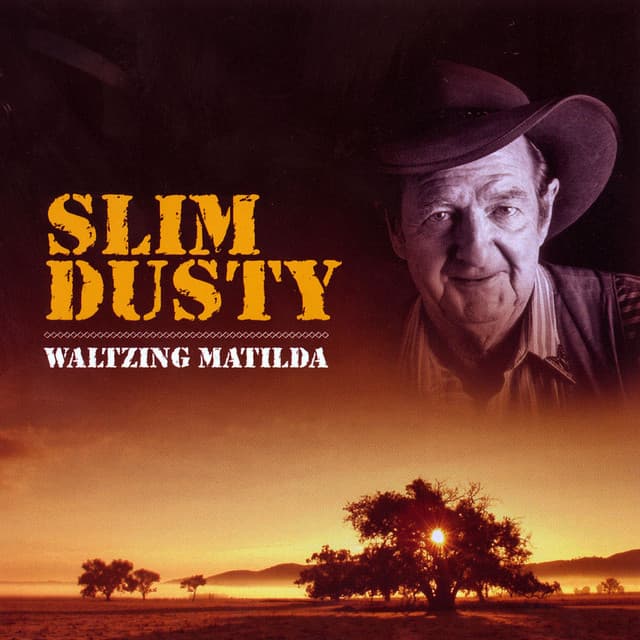
When Slim Dusty released his recording of Waltzing Matilda, the song entered the Australian charts and quickly settled into public consciousness not merely as a folk tune revived, but as a living statement of identity. Issued during the height of Dusty’s commercial influence and later anchored on the album Waltzing Matilda, the recording aligned a nineteenth century bush ballad with a twentieth century voice that Australians already trusted to tell their stories honestly. Chart recognition mattered, but its deeper achievement was cultural rather than numerical. This was a song people already knew, suddenly sounding like it belonged to the present moment.
At its core, Waltzing Matilda predates recorded music itself. Written by Banjo Paterson with a melody adapted from Christina Macpherson’s arrangement, it describes a swagman drifting through the outback, living lightly, taking little, and finally choosing death over capture. In lesser hands, the song can sound quaint or ceremonial, reduced to a national singalong stripped of its darker undercurrents. Slim Dusty refused that simplification. His interpretation restores weight to the narrative, not by dramatizing it, but by letting its inevitability breathe.
Dusty’s voice carries no theatrical flourish here. It is steady, conversational, and almost resigned. That restraint is precisely where the power lies. He sings as someone who understands the swagman not as a mythic rebel but as a familiar figure, a man shaped by isolation, drought, and the quiet codes of survival in rural Australia. In this telling, the song becomes less about defiance and more about dignity. The swagman does not rage against authority. He simply refuses to surrender the small freedom he has left.
Musically, Dusty keeps the arrangement grounded. The rhythm moves forward with the patient certainty of footsteps on a long road. The melody remains plainspoken, allowing the lyrics to carry their historical weight without distraction. This approach mirrors Dusty’s broader career, where authenticity consistently outweighed ornamentation. He understood that Australian stories do not ask to be elevated. They ask to be told straight.
What elevates Waltzing Matilda in Dusty’s hands is its emotional clarity. Beneath the familiar chorus lies a meditation on impermanence. The billabong, the jumbuck, the swag itself are all temporary companions. Dusty sings as if he knows this transience personally, as if the road has already taught him that attachment is both beautiful and dangerous. The final act, the swagman’s leap into the water, lands not as melodrama but as a grimly logical conclusion within a harsh landscape.
Over time, this recording helped cement Slim Dusty not just as a country singer, but as a custodian of national memory. His Waltzing Matilda does not replace earlier versions, nor does it seek to modernize the song beyond recognition. Instead, it bridges eras, reminding listeners that folklore survives only when each generation finds its own voice inside it.
In the vinyl grooves of this performance, Waltzing Matilda stops being a symbol and becomes a human story again. A man, a choice, a song that keeps walking long after the voice fades.