
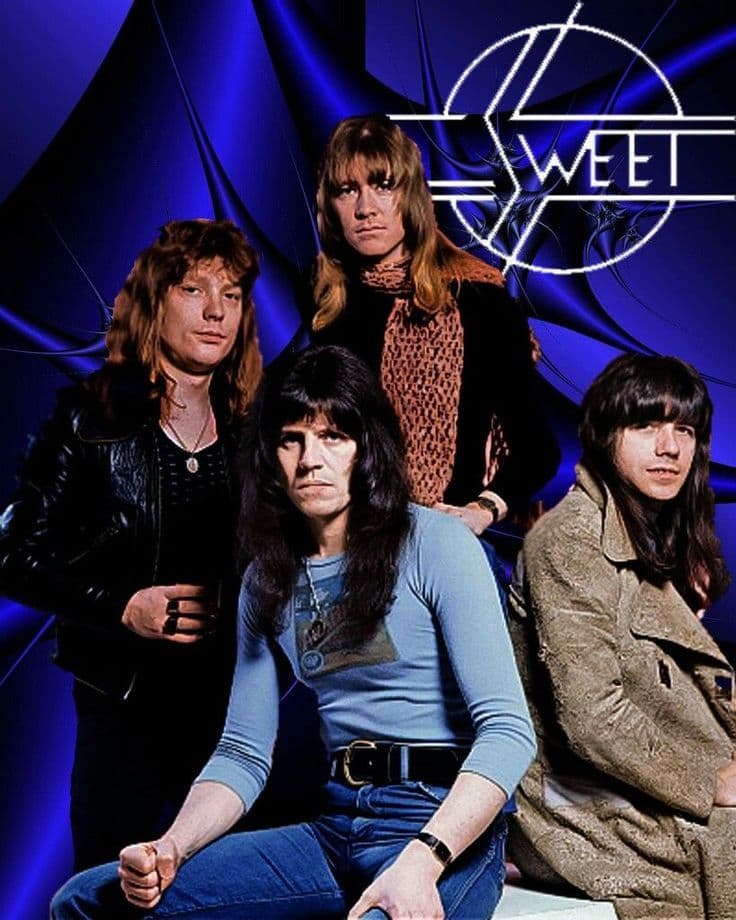
A defiant roar of creative independence, blending Glam’s sheen with Hard Rock’s muscular swagger.
There are certain songs that, when the needle drops or the track begins, instantly transport you back to an era of flared trousers, platform boots, and a healthy dose of pure, unadulterated musical rebellion. “Rebel Rouser,” by the iconic British quartet Sweet, is undoubtedly one of them. For those of us who came of age amidst the colorful, cacophonous theatre of 1970s rock, this track is more than just music; it’s a shimmering, sweat-drenched snapshot of a band demanding to be taken seriously on their own hard-rocking terms.
The essential facts about this sonic blast are vital to understanding its context. “Rebel Rouser” was originally featured on Sweet’s pivotal 1974 album, Sweet Fanny Adams, an LP that marked a dramatic pivot away from the bubblegum-glam hits the band was, perhaps unfairly, most famous for. In most major territories, it was an album track and not a standalone single. However, a crucial piece of chart trivia places its impact firmly in the spotlight: when released as a B-side to “Peppermint Twist” (a cover of the Joey Dee and the Starliters song) in Australia and New Zealand, this pairing—a peculiar decision by their record company, seemingly without the band’s knowledge—soared to the coveted No. 1 chart position in Australia. This overseas triumph serves as a loud, unmistakable testament to the inherent strength and appeal of “Rebel Rouser” itself, proving that the public was ready for the band’s heavier direction.
The deeper story behind “Rebel Rouser” is a tale of a band fighting to control its own destiny. The early 70s saw Sweet—comprising Brian Connolly (lead vocals), Andy Scott (guitar), Steve Priest (bass), and Mick Tucker (drums)—pushed relentlessly by their songwriting/production team, Mike Chapman and Nicky Chinn, into producing smash-hit but often frivolous, radio-friendly glam-pop singles like “Little Willy” and “Block Buster!” Behind the scenes, the four musicians were a formidable, hard-rock unit, and they yearned to showcase their genuine, heavier songwriting and playing prowess. Sweet Fanny Adams, and tracks like “Rebel Rouser,” was their aggressive declaration of independence. For the first time, the band’s own compositions dominated an album, and this song in particular became a powerful statement of that newfound, defiant autonomy.
The song’s meaning is directly tied to this theme of liberation and self-definition. Lyrically, “Rebel Rouser” is a swaggering anthem celebrating an individual who refuses to conform to expectations. It’s a track about shaking off the shackles of what others think you should be. For the band, the ‘rebel rouser’ was a metaphor for themselves—rebelling against the ‘manufactured’ pop image they felt trapped by and stirring up a new, heavier sound in the process. The track’s energy—its driving, crunching guitar riff courtesy of Andy Scott, the thunderous, intricate rhythms laid down by Mick Tucker and Steve Priest, and Brian Connolly’s powerful, sneering vocal delivery—perfectly embodies the youthful spirit of challenging the status quo. It’s a song for anyone who ever felt misunderstood by the mainstream, a galvanizing call to arms for the hard-rock faithful.
Listening to it today, the raw energy and production are instantly arresting. It possesses a glorious, rough-hewn sound that deliberately eschewed the polish of their earlier chart toppers. The blend of classic Glam sensibility (the high energy, the slight theatricality) with the sheer muscle of burgeoning hard rock makes it a profoundly exciting listen. For those of us who remember buying the album, it felt like a secret handshake, a confirmation that our favorite glam band was actually a proper rock band, delivering the goods with a ferocity that few of their peers could match. It evokes the smell of dry ice, the blinding glare of stage lights, and the pure, visceral thrill of loud music shaking you to your core in a time when rock music was a true cultural force. “Rebel Rouser” is not just a song; it’s the defiant, glam-tinged sound of a band finally, and powerfully, becoming themselves.