
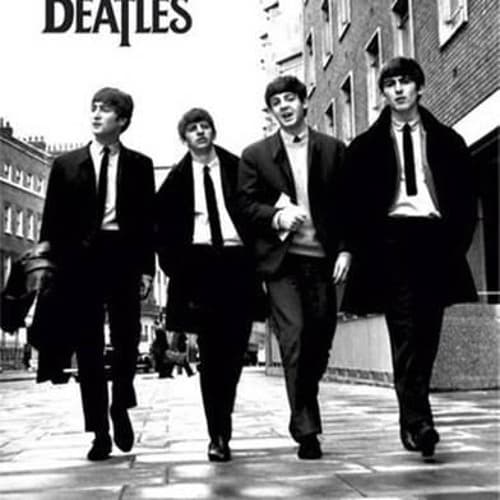
The Pure Elegance of Unspoken Devotion in Something
Upon its release in 1969 as part of The Beatles’ monumental album Abbey Road, Something swiftly emerged as one of George Harrison’s crowning achievements, reaching number one on the Billboard Hot 100 and marking a rare moment when Harrison’s songwriting took center stage amid the towering legacy of Lennon and McCartney. As the second single from the album, paired with Come Together, the song captured both public admiration and critical acclaim, standing as a testament to Harrison’s quiet yet profound musical voice within the band. Over time, Something has been celebrated not only as one of the most romantic ballads in rock history but also as a singular expression of sincerity and emotional clarity, earning praise from peers including Frank Sinatra, who famously declared it one of the greatest love songs ever written.
The genesis of Something lies in Harrison’s exploration of love and devotion through a lens both intimate and universally resonant. Unlike the often abstract or playful romantic expressions of Lennon and McCartney, Harrison’s approach is subtle, meditative, and suffused with reverence. The song’s lyricism traces the trajectory of fascination and quiet admiration, beginning with the simple acknowledgment of “something in the way she moves” and evolving into a profound contemplation of emotional dependency and reverence. There is an understated humility in the words, a recognition of love as a force that exists beyond ego and artifice. Harrison’s phrasing, deliberate and warm, conveys a nuanced emotional spectrum: admiration, longing, gratitude, and awe converge without ever tipping into sentimentality.
Musically, Something is equally compelling in its elegance. The guitar work is both tender and precise, Harrison’s lead lines weaving seamlessly with the rhythm section, while the string arrangement by George Martin elevates the piece with a subtle grandeur that never overwhelms the song’s intimate core. The chord progression, deceptively simple, carries an emotional weight that amplifies the lyrics’ sincerity. Ringo Starr’s drumming provides a gentle pulse, a heartbeat that mirrors the song’s measured expression of devotion, while Paul McCartney’s bass lines lend harmonic warmth that supports Harrison’s vocal delivery. Each musical element collaborates to form a space in which the listener can inhabit the sentiment rather than merely observe it.
The cultural and emotional impact of Something has only deepened with time. It represents a moment when Harrison emerged from the shadow of his legendary bandmates, asserting his distinct artistry and profound capacity for lyrical tenderness. The song’s universality lies in its honesty: it is a love song that feels personal yet timeless, intimate yet boundless. Cover versions by artists ranging from Frank Sinatra to Shirley Bassey attest to its enduring resonance, affirming that Harrison’s delicate articulation of affection continues to strike chords across generations. In Something, the listener encounters not just a melody or a lyric but an invitation to witness devotion rendered in its purest, most luminous form. It stands as an emblem of Harrison’s quiet genius and the enduring power of love expressed through song.