
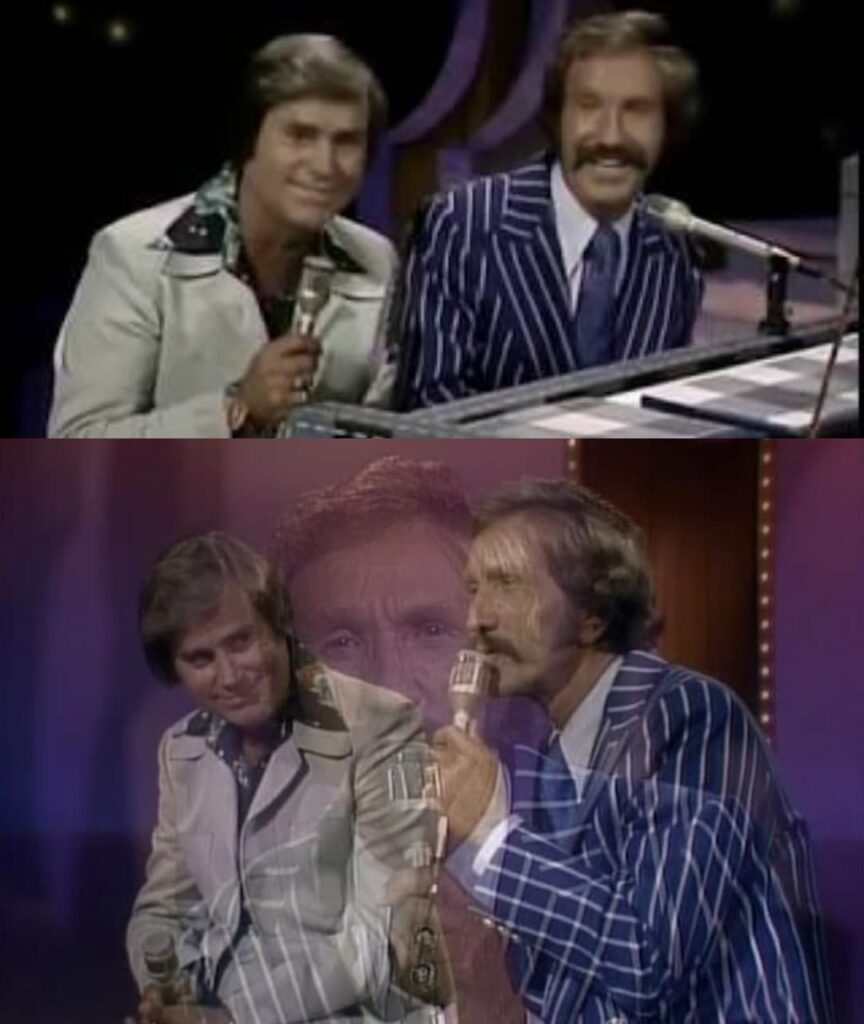
Meeting of Two Country Souls Where Quiet Mastery and Hard Truth Shared the Same Stage
In 1977, The Marty Robbins Spotlight with George Jones arrived not as a chart driven single, but as a televised country music event that carried its own quiet weight within the genre’s living history. Broadcast during an era when variety showcases still mattered, the program placed Marty Robbins in his familiar role as host and curator, inviting George Jones into a space that balanced polish with emotional risk. There was no album release attached, no Billboard position to headline its legacy. Instead, its importance rested in something far rarer. It documented two fully formed legends meeting in real time, each representing a different emotional dialect of classic country music.
At first glance, the pairing seemed almost paradoxical. Marty Robbins, the smooth voiced storyteller, had built his career on narrative control and melodic clarity. His songs moved with purpose, whether riding through Western ballads or exploring romantic devotion with restraint and elegance. George Jones, by contrast, was the genre’s exposed nerve. His voice carried the sound of lived damage, of love bent and bruised but never silenced. To place them together under the banner of a “Spotlight” was to acknowledge that country music did not belong to one emotional register. It survived because it could hold both discipline and collapse in the same room.
What makes The Marty Robbins Spotlight with George Jones endure is not a single performance moment, but the tension that hums beneath the entire presentation. Robbins never attempted to smooth Jones into something safer. Instead, he framed him with respect, allowing Jones’ phrasing, pauses, and famously aching sustain to remain intact. In return, Jones met the setting with a focus that felt almost reverent. This was not the outlaw chaos that tabloids loved to chase. It was the craftsman at work, standing opposite another craftsman who understood exactly what that cost.
Lyrically and emotionally, the material performed during the program leaned into country music’s oldest truths. Love as endurance. Loss as identity. Pride as both shield and wound. Robbins’ presence emphasized structure and songcraft, reminding viewers that even the most devastating emotion needs form to survive. Jones, meanwhile, demonstrated how form becomes unforgettable only when the singer is willing to bleed into it. Their contrast sharpened each other. Robbins sounded steadier. Jones sounded deeper. Neither was diminished.
Culturally, the 1977 broadcast stands as a document of transition. Country music was already shifting toward larger production and crossover ambition, yet here were two voices anchored firmly in the genre’s emotional core. There were no visual distractions, no narrative gimmicks. Just songs, stories, and the unspoken understanding between artists who had already paid their dues.
For those who revisit The Marty Robbins Spotlight with George Jones, the reward is not nostalgia alone. It is recognition. Recognition that country music’s greatest moments often arrive quietly, when two voices meet without competition, each aware that the other carries a different piece of the same truth.