
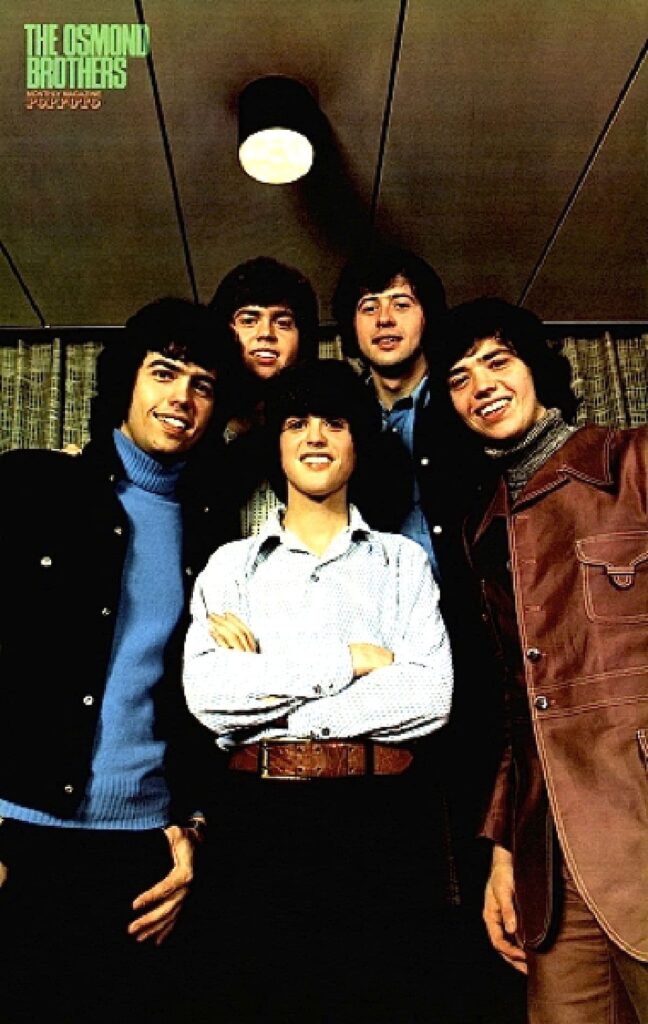
A vibrant Muscle Shoals groove about the simple, exhilarating thrill of being loved twice as much.
There are certain songs that, the moment the opening beat hits, transport you back to an era of polyester suits, teen-idol posters, and the sheer, innocent exuberance of the early 1970s. For many, that song is “Double Lovin'” by The Osmonds. It’s a track that stands as a shimmering testament to the family band’s initial, explosive transformation from clean-cut variety show singers to bona fide chart-topping pop stars, complete with a slick, soulful edge.
Released as a single in May 1971, “Double Lovin'” followed their colossal breakthrough hit, “One Bad Apple,” and successfully kept the momentum of “Osmondmania” rolling. The single peaked at a respectable No. 14 on the prestigious Billboard Hot 100 chart in the United States and climbed even higher in Canada, reaching No. 9 on the RPM Singles Chart. This was an undeniable indicator that the brothers from Ogden, Utah—Alan, Wayne, Merrill, Jay, and Donny—were not a one-hit wonder; they were a pop cultural force. The song was featured on their second official studio album, Homemade, released in June 1971, an album that itself proved popular, peaking at No. 22 on the Billboard Top LPs chart and earning a Gold certification.
The story behind the sound of “Double Lovin'” is perhaps its most compelling aspect for the seasoned music lover. It’s a remarkable piece of blue-eyed soul, not composed by the brothers themselves, but by the writing duo of Mickey Buckins and George Jackson. More significantly, it was recorded in the legendary FAME Recording Studios in Muscle Shoals, Alabama, under the guidance of producer Rick Hall. This choice of venue and personnel placed the squeaky-clean Mormon brothers squarely in the heart of R&B and Southern soul, lending their music an authentic, funky foundation that elevated it far above typical “bubblegum” fare. The track pulsates with the signature Muscle Shoals Sound, featuring a driving rhythm section and punchy horns, a sound so similar to “One Bad Apple” that it was, in essence, a successful formulaic follow-up, ensuring their R&B crossover appeal endured.
At its heart, the meaning of “Double Lovin'” is pure, uncomplicated youthful joy. The lyrics, led by the unmistakable, soaring voice of Merrill Osmond, are a vibrant expression of a love so deep and all-consuming that it feels like the singer is getting “double lovin’.” It’s a bright, infectious metaphor for the intense, giddy rush of teen romance—a feeling that one person’s affection is equivalent to that of two, or even more. This simple, upbeat message resonated deeply with their youthful, and overwhelmingly female, audience. For the listener today, especially those who were there, the song doesn’t just recall the music; it recalls a time of first crushes, innocent dances, and the unbridled, optimistic sound of a generation finding its pop rhythm. It’s a reminder that before the brothers would pivot to the hard-rocking sound of Crazy Horses or the solo balladry of Donny, they were the vibrant, soulful voice of a pop moment, perfectly capturing the bright glow of young love and the excitement of a new sound emerging from the American South. The sheer energy of their performance, often highlighted in live recordings from the era, proves that despite their wholesome image, they were capable of delivering genuine, gritty soul music with an unmistakable pop sheen.