
Two Charts, One Voice, a Man Who Refused to Choose Between Desire and Destiny
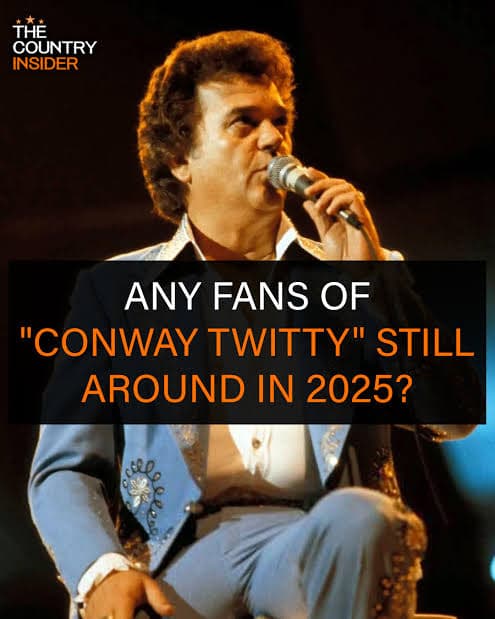
When Conway Twitty released It’s Only Make Believe in 1958, popular music briefly forgot how to draw borders. Issued on the album Conway Twitty Sings, the single did something almost unthinkable in a segregated industry. It climbed to No. 1 on the Billboard Hot 100 and, in time, became a cornerstone of his country legacy as well. Few recordings announce an artist so completely in one moment. Fewer still forecast a career that would move fluently between pop idol and country institution without surrendering authenticity to either camp.
The story of It’s Only Make Believe is inseparable from Twitty’s restless musical identity. Born Harold Lloyd Jenkins, he arrived in the late 1950s chasing a pop dream shaped by Elvis Presley’s shadow and the romantic melodrama of early rock and roll. The song’s origin was almost accidental, written during a lull while Twitty and drummer Jack Nance were driving between shows. What emerged was a ballad built on yearning rather than swagger, its power rooted not in volume but in emotional restraint. The lyric is simple, almost fragile, yet devastating in its honesty. Love is imagined, not possessed. Hope exists only because reality has failed.
Musically, the record balances on a delicate edge. The arrangement is spare and patient, allowing Twitty’s voice to do the heavy lifting. That voice, trembling but controlled, carries a vulnerability that pop audiences recognized instantly. It does not beg. It confesses. Each sustained note feels like a man holding himself together long enough to finish the thought. This was not teenage fantasy. It was adult longing disguised as a pop single, and that distinction mattered.
The cultural confusion that followed only deepened the song’s legend. Rumors circulated that the voice belonged to Elvis, a testament to how convincingly Twitty had tapped into the era’s sonic language. Yet as the years unfolded, It’s Only Make Believe revealed itself as something more durable than imitation. When Twitty later reinvented himself as a dominant country artist, the song found new resonance. Country listeners heard the same ache, now framed as emotional truth rather than pop drama. The lyric never changed. The audience did.
This dual life is the key to understanding Twitty’s singular achievement. He did not conquer pop and country by force. He seduced them by telling the same truth in two dialects. It’s Only Make Believe stands as the emotional blueprint for everything that followed, from his smooth country ballads to the intimate duets that defined his later years. It proves that genre is often a matter of presentation, while feeling remains universal.
In retrospect, the song feels prophetic. It captures a man on the threshold, unaware that he is about to live several musical lives in one. Two charts bowed to a single voice, and for a moment, the industry listened without arguing. That moment still echoes, quietly insisting that great songs do not belong to categories. They belong to the people who recognize themselves inside them.